• Products
  • Solutions
  • Support
  • Contact
  • Order OnlineOrder Online

2026 Top Energy Meter Types for Global Buyers?

Global energy demand is becoming more digital, distributed, and difficult to measure accurately. The International Energy Agency’s Electricity 2024 report expects strong electricity demand growth through 2026, driven by cooling, data centers, industry, and electrification. More consumption means greater pressure on every energy meter installed in homes, factories, offices, and renewable energy sites.

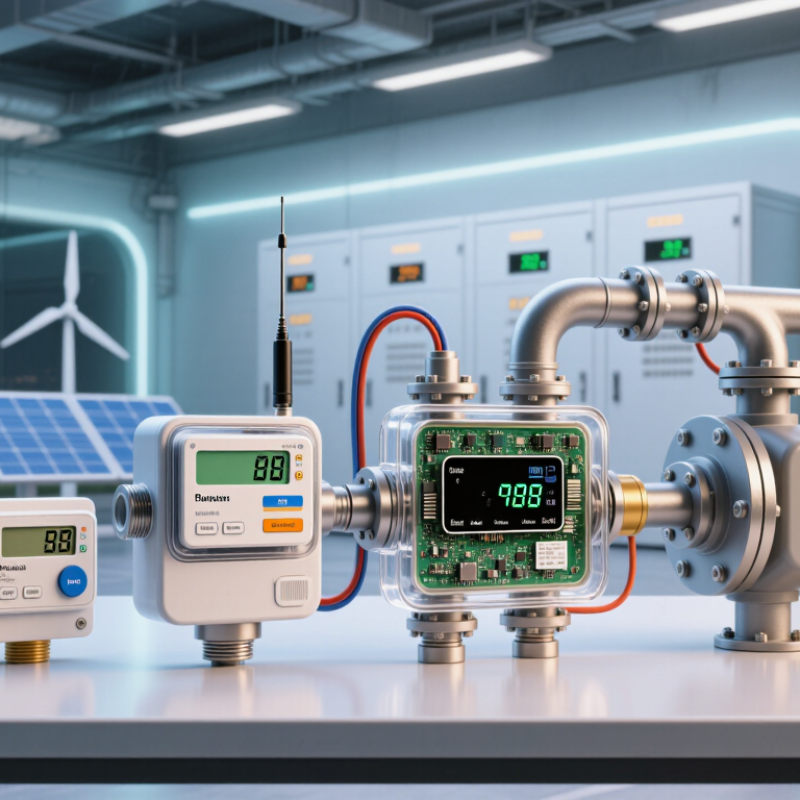
For global buyers, the market now includes smart meters, digital panel meters, prepaid meters, CT-operated meters, multifunction power meters, and IoT-enabled submeters. Each type solves a different problem. A smart meter supports remote readings and time-based tariffs. A CT meter handles higher currents safely. A power-quality meter reveals voltage dips, harmonics, and unstable loads. The wrong selection can create inaccurate billing, difficult maintenance, or expensive replacement work.

Look beyond the display.

The U.S. Energy Information Administration’s latest electricity infrastructure data shows the continuing importance of advanced metering systems in utility networks. Meanwhile, the Energy Institute’s Statistical Review of World Energy 2024 highlights the scale and changing structure of global electricity consumption. These reports do not identify one universal winner. They show a market requiring better measurement and stronger system integration.

This guide compares the top energy meter types for global buyers in 2026. It considers accuracy, communication protocols, installation conditions, cybersecurity, certification, lifecycle cost, and after-sales support. IEC 62052 and IEC 62053 remain useful reference points for meter performance and testing. However, standards alone cannot guarantee a suitable purchase. Local grid conditions, tariff structures, enclosure space, and operator experience still matter. That practical detail is easy to underestimate.

2026 Top Energy Meter Types for Global Buyers?

What Is an Energy Meter and How Does It Work?

An energy meter measures electricity entering a building, machine, or grid connection. It records voltage and current, then calculates real power using their relationship and the power factor. The meter adds these readings over time, producing kilowatt-hours, the unit shown on most bills. Simple meters display consumption locally. Smart meters also transmit readings through wired or wireless networks.

The main types include electromechanical, electronic, smart, prepaid, and transformer-operated meters. Electronic meters use sensors and digital circuits, so they offer better accuracy and more functions than older rotating-disc designs. Smart meters can report interval data, detect outages, and support remote meter reading. Current transformers help measure high loads safely, especially in factories and commercial buildings. IEC 62052 and IEC 62053 define important requirements for meter safety, accuracy, and testing.

Demand is becoming harder to manage. The International Energy Agency’s Electricity 2024 report projects global electricity demand will grow by an average of 3.4% annually through 2026. That growth increases the value of accurate interval measurement. However, a smart meter is not automatically a better meter. Poor installation, incorrect transformer ratios, weak communication, or unsuitable accuracy classes can distort results. Field checks still matter. A loose terminal can quietly create bad data. Global buyers should compare measurement range, phase configuration, accuracy class, communication protocol, environmental rating, and local certification before selecting a meter. Costs are only one part of the decision.

How Are Energy Meter Types Classified?

Energy meters are classified by what they measure, how they connect, and where they operate. The basic division is between electricity, gas, heat, and water meters. Electricity meters then split into single-phase and three-phase models. Single-phase units suit homes and small shops. Three-phase meters serve factories, offices, and large pumps.

Measurement capability creates another clear distinction. Electromechanical meters record accumulated consumption, while electronic meters provide better accuracy and wider functions. Smart meters add two-way communication, remote readings, outage alerts, and time-based tariffs. The International Energy Agency reported in Energy Efficiency 2023 that more than one billion smart meters had been installed worldwide. That figure shows scale, but not universal quality. Network coverage and data security still influence field performance.

Energy meters can also be classified by installation method. Direct-connected meters measure current through their internal terminals. Transformer-operated meters use current or voltage transformers for high-load systems. This difference matters greatly in industrial purchasing. The U.S. Energy Information Administration reported that advanced meters represented over 70% of U.S. electricity meters in 2023. Communication types include cellular, radio mesh, power-line carrier, and wired protocols. Each option affects installation cost, latency, and maintenance. In practice, buyers should classify the meter twice: by technical measurement and by operating environment. A simple category can mislead. A technically accurate meter may still fail in a humid plant, a remote site, or a facility with unstable communications.

Which Energy Meter Types Are Available in 2026?

Which Energy Meter Types Are Available in 2026?

Global buyers can choose from several energy meter types in 2026. Basic digital meters remain practical for homes, workshops, and small commercial spaces. They show accumulated consumption on a clear electronic display. Smart meters add remote readings, interval data, outage alerts, and two-way communication. Their value depends on reliable network coverage and compatible software.

Bidirectional meters measure electricity flowing both into and out of a property. They support solar installations, battery systems, and other distributed energy projects. Prepaid meters help users monitor spending through credit-based consumption. Submeters divide energy use among apartments, departments, rental units, or production lines. For high-current applications, CT-operated meters use external current transformers and require careful installation.

Power quality meters record voltage variation, harmonics, frequency, and demand peaks. They suit factories and facilities where sensitive equipment may stop unexpectedly. Some advanced meters combine these functions with data logging and remote dashboards. Buyers should check accuracy class, communication protocol, enclosure rating, temperature range, and local certification requirements. A cheaper meter can become expensive when its data cannot connect with existing systems.

In field use, installation errors often create misleading readings. Loose terminals, incorrect transformer ratios, and poor grounding deserve close inspection. I have found that product specifications rarely describe every maintenance challenge. A meter may be technically capable but unsuitable for dusty rooms or unstable communications. Reviewing actual load patterns, inspection access, and future expansion plans usually produces a more dependable choice.

How Do Global Buyers Compare Energy Meter Features?

Global buyers compare energy meters by matching features to real operating conditions, not by choosing the longest specification sheet. Start with the electrical system: single-phase meters suit apartments and small shops, while three-phase models support factories and commercial buildings. Check the rated voltage, current range, overload capacity, and accuracy class. A meter that reads accurately at light loads can reveal waste that a basic unit may miss.

Communication features also deserve close attention. RS-485, wireless links, and cellular options affect installation cost and data access. Buyers should ask whether the meter supports interval data, load profiles, remote reading, and secure firmware updates. In humid or dusty locations, enclosure protection and operating temperature matter. Certification records, calibration procedures, and a clear warranty are stronger evidence than attractive product claims. In field assessments, I have seen buyers overvalue screen size and undervalue terminal safety. That mistake can become expensive.

Tips: Compare three sample bills with the meter’s expected readings. Request test data at low, medium, and high loads. Check whether software exports common file formats. Ask who handles calibration after installation. Do not ignore local grid requirements. A feature can look useful but remain unavailable in practice. I also recommend reviewing installation manuals before purchase. Some specifications seem clear until wiring conditions become difficult. Reliable comparison means testing the complete system, including sensors, communication, software, and support.

2026 Top Energy Meter Types for Global Buyers? - How Do Global Buyers Compare Energy Meter Features?

Energy Meter Type Typical Measurement Scope Typical Accuracy Class Communication and Data Functions Key Advantages Common Limitations Best-Fit Applications
Electromechanical Induction Meter Single-phase or three-phase active energy; usually direct-connected Typically Class 2 under IEC 62053-11 or equivalent national requirements No integrated digital communication; manual register reading Simple construction, long field history, easy visual inspection, and low technology requirements Limited remote management, slower response to tampering, no detailed load profile, and moving parts can wear over time Legacy installations, basic low-voltage billing, and markets where advanced metering infrastructure is not yet required
Static Single-Phase Meter Active energy for residential and small commercial circuits; direct connection commonly up to approximately 100 A, subject to local design rules Commonly Class 1; higher-accuracy versions may be available Optional optical port, pulse output, or low-power wired/wireless interface No mechanical moving parts, compact design, stable measurement, and support for electronic tariff registers Communication, cybersecurity, and remote-control capability depend strongly on the selected configuration Homes, apartments, small retail premises, rental submetering, and basic distribution-board metering
Static Three-Phase Meter Active and, depending on configuration, reactive energy in three-phase four-wire or three-phase three-wire systems Commonly Class 1 for active energy; Class 2 versions are also used; reactive measurement may follow IEC 62053-23 classes Pulse output, optical interface, RS-485, or other optional local communication Suitable for commercial loads, supports multi-register tariffs, and provides stable measurement without moving parts Usually requires professional installation and correct phase, neutral, and wiring verification Commercial buildings, workshops, small factories, agricultural facilities, and three-phase submetering
Smart AMI Meter Active and reactive energy, demand, voltage, current, power factor, event logs, and interval data Often Class 1 or Class 0.5S for active energy, depending on regulatory and utility requirements RF mesh Cellular PLC NB-IoT LTE-M Remote reading, remote connection or disconnection, outage notifications, load profiling, tamper detection, and time-of-use billing support Higher purchase and integration cost; requires network coverage, head-end software, cybersecurity controls, and data governance Utility-scale residential and commercial deployments, national smart-grid programs, and large multi-site portfolios
Prepaid Energy Meter Usually single-phase or three-phase active energy with balance or credit management Commonly Class 1 or Class 2, subject to the applicable metering regulation Keypad, token, mobile interface, RF, cellular, PLC, or cloud-connected credit management Improves payment control, provides consumption visibility, and can reduce billing arrears Requires reliable credit validation and customer support; emergency credit and disconnection rules vary by jurisdiction Rental properties, public housing, microgrids, off-grid projects, and markets using pay-as-you-go electricity services
CT-Operated Revenue Meter Medium-current or high-current three-phase installations using external current transformers Commonly Class 0.5S or Class 0.2S for active energy in revenue-grade applications, depending on the system design Optical port, RS-485, Ethernet, cellular, or utility-specific communication options Handles high loads without routing full line current through the meter and supports accurate commercial settlement Overall accuracy depends on the meter, CT ratio, CT accuracy, wiring, burden, polarity, and installation quality Industrial plants, commercial substations, renewable-energy sites, feeders, and high-load billing points
Bidirectional Net Meter Import and export active energy; may also record reactive energy and four-quadrant power Often Class 1 or Class 0.5S for active energy, depending on settlement requirements Pulse, RS-485, cellular, RF, PLC, or inverter and energy-management-system integration Separately measures electricity drawn from and supplied to the grid, enabling export settlement and self-consumption analysis Tariff rules, anti-islanding responsibilities, register definitions, and interconnection requirements differ by market Rooftop solar, battery storage, distributed generation, net-metering, and prosumer installations
Power Quality and Multifunction Meter Energy, demand, voltage, current, frequency, power factor, harmonics, unbalance, and event records Energy accuracy may be Class 0.5S or better; power-quality performance depends on the applicable IEC 61000-4 measurement methods and instrument class RS-485/Modbus, Ethernet, BACnet gateway, web interface, or industrial automation protocols Provides diagnostic data for energy efficiency, equipment protection, load studies, and power-quality investigation Higher cost and data complexity; it is not always a substitute for a certified revenue meter unless explicitly approved Factories, data centers, hospitals, commercial campuses, building-management systems, and critical infrastructure
DC Energy Meter Direct-current energy for photovoltaic strings, battery systems, charging infrastructure, and DC distribution Common accuracy specifications range from approximately 0.5% to 1.0% of reading or full scale, depending on the product and application standard CAN, RS-485/Modbus, Ethernet, pulse output, or charger and battery-management-system interfaces Enables DC-side efficiency monitoring, battery charge and discharge accounting, and EV charging measurement AC revenue-meter classifications do not automatically apply; voltage range, isolation, shunt, and Hall-sensor design must be checked carefully Solar plants, battery energy-storage systems, DC microgrids, telecom power systems, and electric-vehicle charging equipment

Buyer comparison note: Accuracy classes, communication protocols, safety ratings, data-retention periods, cybersecurity requirements, and approval rules vary by country and project. Final selection should be verified against the applicable national metrology regulations, grid code, installation category, tariff structure, and relevant IEC or regional standards.

What Should Buyers Consider Before Selecting an Energy Meter?

Choosing an energy meter starts with the site, not the product catalogue. A small office may need a single-phase digital meter, while a factory may require a three-phase meter with current transformers. Confirm voltage, maximum load, frequency, wiring method, and measurement direction before comparing prices. I have seen procurement teams select accurate meters that could not fit existing panels.

Accuracy matters, but operating conditions matter too. Check the accuracy class at low and high loads, not only the headline rating. Ask for calibration records, test methods, and compliance documents from recognized authorities. In dusty workshops or outdoor cabinets, enclosure protection and temperature range can prevent unstable readings. Humidity is often overlooked. It should not be.

Communication features deserve practical testing. Modbus, pulse output, or wireless connectivity may support billing and energy monitoring, but compatibility with existing software must be verified. Confirm data intervals, time synchronization, access controls, and firmware update procedures. A secure meter should limit unauthorized changes. For large sites, evaluate transformer ratios, installation clearance, maintenance access, and spare-part availability. Total cost includes wiring, commissioning, inspections, and future replacement. The cheapest quotation can become expensive after one avoidable integration mistake. I would also request sample data before approval. Paper specifications rarely reveal every field issue.