X
X
X
X Choosing the right ct current transformer in China requires more than comparing prices and catalog photographs. The device must match your system voltage, primary current, secondary output, accuracy class, burden, and installation space. A mismatch can distort protection signals or reduce metering reliability. Small details matter.
This guide explains how to evaluate Chinese manufacturers with practical, engineering-based criteria. It considers IEC 61869-2 requirements, relevant national standards, factory testing, material quality, and documented calibration procedures. Ask suppliers for ratio-accuracy results, insulation-test records, temperature data, and sample test reports. If possible, inspect the production line and observe winding, insulation, sealing, and final inspection practices. A reliable factory should explain its core calculations clearly, not hide behind generic certificates.
Real projects also reveal less obvious risks. A compact CT may fit inside a switchgear cabinet but fail to provide enough burden capacity. A low-cost unit may appear efficient until cable length, relay input, and ambient heat change the operating conditions. No checklist is perfect. Supplier responses can be incomplete, and testing methods may vary between laboratories. That is why technical drawings, witnessed tests, and clear acceptance criteria should support every purchase. From utility metering to industrial protection, the best ct current transformer is the one proven for your exact operating environment, not merely the one with the lowest quotation.
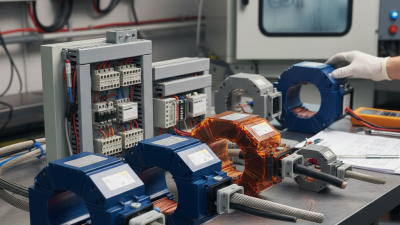
Understanding CT current transformer types and applications is essential for safe, accurate power measurement in China. A metering CT supports energy measurement and billing systems. A protection CT helps relays detect overloads and short circuits. Ring-core CTs suit compact switchboards, while bar-type CTs work well in busbar systems. Split-core models simplify installation when cables cannot be disconnected. Wound CTs offer flexible ratios for selected low-current applications. Each type has limits.
China’s power projects often include substations, factories, solar farms, wind facilities, rail systems, and commercial buildings. Select the CT according to primary current, secondary output, accuracy class, insulation level, burden, and short-time withstand current. Check whether the system uses a 1 A or 5 A secondary circuit. For outdoor equipment, temperature, humidity, dust, and altitude require careful evaluation. Installation space matters too. A technically strong CT can still fail when its window is too small. That detail is easy to miss.
Tips: Confirm the protection class with the relay engineer. Never leave a CT secondary open during operation. Compare test reports, calibration records, and applicable Chinese or international standards. Ask for polarity markings and wiring diagrams. Field experience shows that many selection errors begin with incomplete load data. A perfect choice rarely exists. Recheck the assumptions.
Defining electrical requirements should come before comparing suppliers. The IEA Electricity 2024 report forecasts global electricity demand growth of 3.3% in 2024 and 3.4% in 2025. That trend increases measurement pressure in factories, substations, and renewable-energy projects. Record the primary current, system voltage, frequency, installation space, and maximum fault current. A 400/5 A CT may suit normal operation but saturate during a severe short circuit. That mistake is expensive.
Accuracy requirements depend on the meter and the application. Energy settlement often needs Class 0.2S or 0.5S performance, while general monitoring may accept Class 1.0. Protection CTs require different choices, such as 5P or 10P classes. Check the rated burden in VA, cable length, and connected relay impedance. IEC 61869-2 defines key CT performance requirements, while China’s GB/T 20840.2 supports local compliance. Do not trust accuracy numbers without the test conditions.
Safety deserves equal attention. Confirm insulation level, thermal short-time current, impulse withstand, terminal markings, and secondary grounding. Keep the secondary circuit closed during operation. Never assume a compact body means safer installation. In field inspections, loose terminals and incorrect polarity still appear. The datasheet can look perfect. The installation may not. Ask for routine test records, ratio and polarity results, temperature-rise data, and traceable calibration evidence before approving the CT.
Choosing the best CT current transformer in China requires more than comparing quotations. Start with the manufacturer’s engineering records, not polished catalog pages. Ask for IEC 61869-2 compliance evidence, routine test reports, and a clear accuracy-class declaration. ISO 9001 certification can indicate controlled processes, but it does not guarantee every unit performs well. Check certificate scope, validity, issuing body, and factory coverage.
Product quality becomes visible in small details. Review winding materials, insulation design, terminal strength, sealing, and nameplate accuracy. For protection CTs, examine knee-point voltage, excitation curves, and saturation performance. For metering CTs, verify ratio error, phase displacement, burden, and accuracy under actual operating conditions.
A reliable supplier should provide batch traceability and calibrated instruments. Each serial number should connect to its test records. Ask for witness testing before shipment.
Factory visits add useful evidence. Look for clean winding areas, controlled resin casting, dry storage, and technicians who explain deviations clearly. A perfect sample can mislead. Field inspections often reveal inconsistent production controls that documents do not show. Request independent laboratory verification for critical projects, especially when measurements affect protection coordination or billing. Chinese manufacturing capacity is broad, but quality is not uniform. Leave room for doubt, and make acceptance criteria measurable. A lower price may reflect efficiency, or a missing control step. Investigate before choosing.
How to Choose the Best CT Current Transformer in China?
Specification should match the application, not just the lowest quotation. IEC 61869-2 defines requirements for instrument transformers, including accuracy, insulation, and thermal performance. Check the ratio, burden, accuracy class, frequency, short-time thermal current, and indoor or outdoor rating. For protection systems, confirm the knee-point voltage and excitation curve. A metering CT may perform well in normal loads but fail during a fault. That difference matters.
Pricing depends on core material, copper content, insulation, testing, and enclosure design. A basic metering CT may cost less, but a customized protection unit requires engineering time and additional tests. IEA’s Electricity 2024 report forecasts global electricity demand growth of about 4% annually through 2026. This pressure increases demand for reliable grid components. However, a faster quotation is not always better. Request a full technical datasheet, routine-test record, calibration evidence, and clear Incoterms. Delivery can change with core availability, factory workload, and inspection requirements.
Tips: Ask for three comparable quotations. Compare total cost, not unit price. Provide drawings, cable dimensions, ratio requirements, and installation conditions. Confirm prototype timing and mass-production lead time in writing. I have seen projects delayed because a window opening was measured incorrectly. That small error forced redesign, extra freight, and uncomfortable explanations. Build in inspection time before shipment. Mistakes happen; undocumented assumptions make them expensive.
How to Choose the Best CT Current Transformer in China?
A reliable CT supplier should provide practical installation support, not only a quotation. Ask for wiring diagrams, terminal labels, mounting dimensions, and secondary circuit instructions. During site work, technicians should verify polarity, phase identification, and single-point grounding.
Testing standards deserve careful checking. Request routine test reports that show ratio error, phase displacement, insulation resistance, excitation characteristics, and burden performance. For protection CTs, confirm the knee-point voltage and accuracy class.
IEC 61869-2 and relevant Chinese standards, such as GB/T 20840.2, offer useful reference points. However, paperwork alone is not enough. The report should match the serial number, test date, and actual configuration. I would also ask whether independent calibration records are available.
After-sales service often reveals the supplier’s real reliability. Confirm response times, warranty coverage, replacement procedures, and remote troubleshooting arrangements. A capable team can review site photos, test secondary resistance, and identify incorrect connections quickly.
Spare terminal parts may matter more than a polished brochure. One overlooked detail can delay commissioning for days. I have seen technical teams assume every installation follows the drawing; field conditions often disagree. A good supplier should accept questions, document changes, and admit when a design needs review.