What is a CT Current Transformer and How Does It Work?
In the ever-evolving world of electrical engineering, understanding the role of a CT current transformer is crucial. Dr. Emily Chen, a leading expert in power systems, states, “CT current transformers are essential for accurate measurement and protection in electrical networks.” This highlights the importance of these devices in ensuring safety and efficiency.
CT current transformers function by converting high current levels into manageable values. This conversion allows for precise metering and protection of electrical equipment. With their ability to relay real-time data, they are invaluable in monitoring power systems. However, many still underestimate their significance in preventing overloads and faults.
Despite their critical role, misconceptions about CT current transformers persist. Some engineers may focus only on traditional methods. Ignoring advancements in current transformer technology can lead to inefficient designs. Therefore, continuous learning and adaptation are necessary in this field. Understanding the intricacies of CT current transformers ensures better outcomes in electrical projects, fostering both safety and innovation.
What is a Current Transformer (CT)?
A Current Transformer (CT) is a crucial device in electrical engineering. It is designed to measure alternating current (AC) by producing a proportional secondary current. This secondary current can then be easily monitored by instruments. Essentially, a CT allows engineers to assess large currents safely without interrupting the power supply.
These transformers operate based on electromagnetic induction. When AC flows through the primary winding, it creates a magnetic field. This field induces a current in the secondary winding. The ratio of primary to secondary turns controls this current output. The accuracy of the CT directly impacts the measurements taken from it.
When using a Current Transformer, ensure proper installation. Incorrect connections can lead to inaccurate readings. Periodically calibrate the CT to maintain measurement reliability. It's also wise to consider the CT's burden, which is the load connected to its output. A burden exceeding the specified limit can diminish performance.
Regular maintenance checks are important as well. Dirt and dust can affect connections. Inspect bends and loops in wiring that could introduce errors in readings. Understanding these elements can enhance the effectiveness of CTs in your electrical monitoring setup.
Current Transformer (CT) Data Analysis
Principle of Operation for Current Transformers
Current transformers (CTs) are vital for monitoring electrical currents in various applications. Their operation hinges on the principle of electromagnetic induction. When an alternating current flows through the primary conductor, it induces a magnetic field. This field generates a proportional current in the secondary winding.
CTs are designed to provide accurate measurements, typically with ratios like 100:5 or 1000:5. This means that a primary current of 100 amps produces a secondary current of just 5 amps. However, accuracy can be affected by factors such as saturation and burden impedance. A study from the IEEE reveals that improper installation can lead to measurement errors exceeding 10%.
The performance of CTs also depends on their core material and design. Ferrite cores are popular due to their high magnetic permeability. However, precision can diminish under certain conditions. Environmental factors like temperature fluctuations and mechanical stress may impact their reliability. Regular calibration is essential to maintain accuracy and safeguard systems.
Types of Current Transformers and Their Applications
Current transformers (CTs) are essential for electrical measurement and protection. They are designed to measure high current levels by producing a proportional lower current. This functionality is crucial for monitoring power systems and ensuring safety.
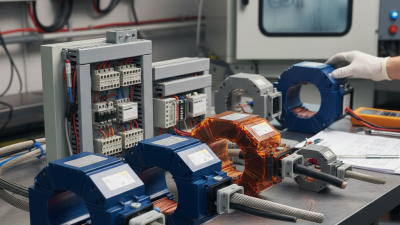
CTs come in various types, each suited for specific applications. The most common types include window-type, bar-type, and precision CTs. Window-type CTs are ideal for installations that require easy access to conductors. They are often used in commercial buildings. Bar-type CTs are selected for heavy industrial applications due to their robustness. Precision CTs, on the other hand, provide high accuracy for metering purposes and are prevalent in utility companies.
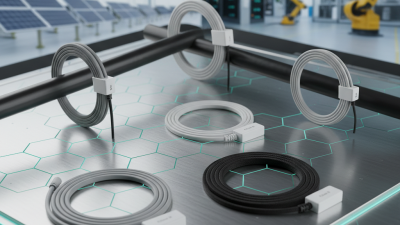
In addition, there are split-core and clamp-on CTs, which facilitate easy installation and maintenance. These options are particularly useful for retrofitting existing systems. Despite the advancements in CT technology, one must remain cautious about accurate calibration and installation practices. Misalignment can lead to inaccurate readings, which can compromise system performance. Therefore, regular testing and adherence to guidelines are essential for reliable operation.
Installation and Maintenance of CTs
Current Transformers (CTs) play a crucial role in power systems. Proper installation and maintenance are vital for optimal performance and safety. When installing CTs, ensure they are positioned correctly to avoid incorrect readings. Misalignment can lead to significant measurement errors. It’s essential to follow the manufacturer’s guidelines for specific installation requirements.
During maintenance, inspecting the connections is crucial. Loose connections can cause overheating and equipment damage. Refer to industry reports indicating that approximately 25% of transformer failures are linked to poor connections. Regularly testing the operational capabilities can also help preemptively identify issues. Utilizing calibrated testing devices is advisable for accurate results.
Maintaining clear records of inspections and repairs fosters reliability. Lack of documentation can lead to repeated mistakes. Always ensure that technicians are trained regularly. Continuous education keeps the team updated with the latest practices. Power utilities benefit from employing a systematic approach to CT maintenance. This can improve overall grid reliability and performance.
Safety Considerations in Using Current Transformers
When using current transformers (CTs), safety is a paramount concern. According to a report from the International Electrotechnical Commission, improper handling of CTs can lead to electrical hazards, including shock and arcing. The energy stored in a CT can be significant, and if a secondary circuit is opened while the primary is energized, it may create dangerously high voltages. Maintaining proper grounding and ensuring that the secondary circuit is never left open are critical for safe operation.
In addition, personnel must be trained in the safe installation and maintenance of CTs. The National Fire Protection Association emphasizes the importance of understanding the specifications of the transformers being used. Notably, the installation must comply with local electrical codes to mitigate the risk of fire or electrical failure. Regular testing of CTs is also essential. A study by the Electrical Safety Foundation International has shown that nearly 30% of electrical incidents in industrial settings could have been avoided with proper circuit monitoring and maintenance practices.
Furthermore, it is vital to be aware of the physical characteristics of CTs. For instance, selecting the right CT ratio is crucial. Using a transformer with the incorrect rating can introduce measurement inaccuracies. These inaccuracies can compromise performance and lead to failures in the protection system. Every technician and engineer should continually evaluate their work processes to improve safety protocols and mitigate risks associated with current transformers.
 X
X