Why Choose Split Core CT for Your Electrical Measurements?
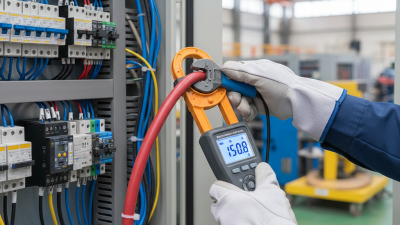
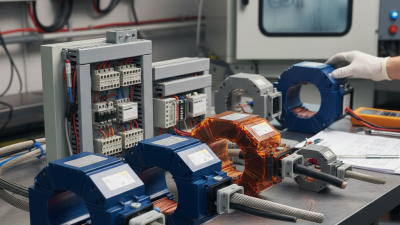
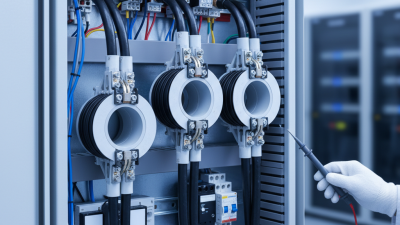
In the evolving field of electrical measurements, experts emphasize the importance of using effective tools. John Smith, a leading specialist in energy management, notes, “Split core CTs are crucial for accurate data collection.” This highlights the significance of split core CT technology in modern applications.
Split core CTs provide a unique advantage for monitoring electrical systems. Their design allows for easy installation without disrupting existing wiring. This is vital for ongoing projects where downtime must be minimized. More professionals are recognizing the value of this technology. Yet, some still question its practicality in various scenarios.
By using split core CTs, users gain reliable measurements with minimal issues. However, it's essential to acknowledge that not every situation is ideal for this option. Every electrical system has its quirks, which must be considered. Adopting this technology requires careful planning. Reflecting on potential shortcomings can lead to better decision-making in the long run.
Understanding Split Core CT Technology
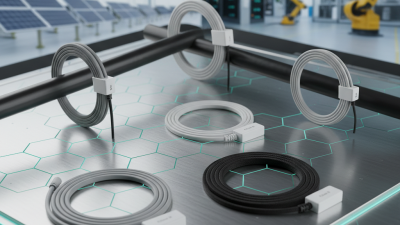
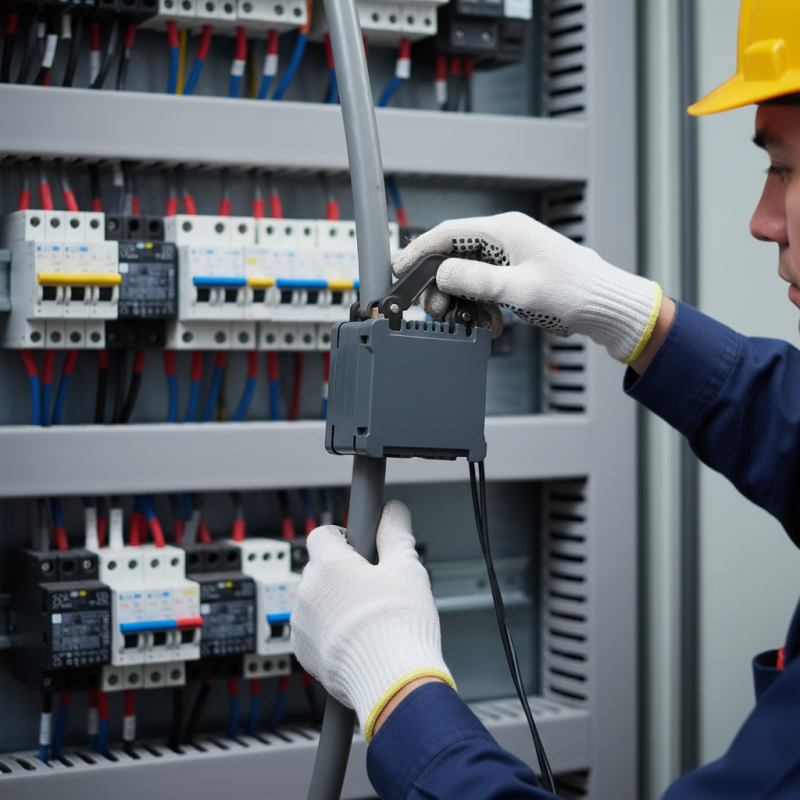
Split core current transformers (CTs) are an innovative technology in electrical measurements. They’re designed to measure alternating current without needing to disconnect wiring. This feature makes installation quick and efficient. Electricians can simply "snap" the CT around a conductor. This ease of use is a significant advantage in busy environments.
Understanding split core CT technology involves grasping how they operate. These devices work on the principle of electromagnetic induction. When current flows through a conductor, a magnetic field is generated. The split core captures this field and converts it into a proportional current. This process enables precise measurements.
There are challenges, though. Ensuring proper alignment of the split core is crucial for accuracy. If not aligned well, readings can be off. Regular calibration is essential to maintain the integrity of measurements. Users should also be aware of their limitations. Factors like temperature and external magnetic fields can affect performance. These aspects require careful consideration, even as the technology streamlines the measurement process.
Why Choose Split Core CT for Your Electrical Measurements? - Understanding Split Core CT Technology
| Feature |
Benefit |
Application |
| Non-Invasive Installation |
Easy to install without interrupting existing wiring |
Residential and commercial building energy monitoring |
| High Accuracy |
Provides accurate measurements of current |
Power monitoring applications in industrial settings |
| Versatile Sizing |
Available in multiple sizes to fit various cable diameters |
Compatibility with different electrical systems |
| Wide Measurement Range |
Capable of measuring a broad spectrum of current levels |
Diverse applications from residential to large-scale industrial |
| Durability |
Designed to withstand harsh environments |
Outdoor installations and rugged industrial uses |
Key Advantages of Split Core CT in Electrical Measurements
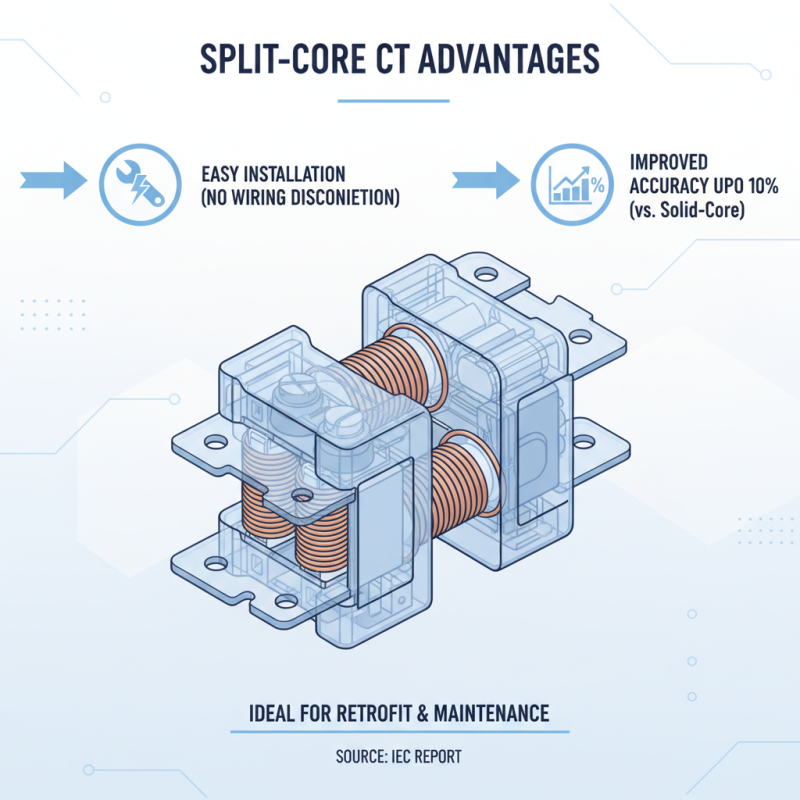
Split core current transformers (CTs) offer distinct advantages for electrical measurements. Their design allows for easy installation without the need to disconnect existing wiring. This feature is particularly valuable in retrofit applications or maintenance scenarios where interruptions must be minimized. According to a report by the International Electrotechnical Commission, the split core technology can improve measurement accuracy by up to 10% compared to traditional solid core CTs.
Another key benefit of split core CTs is their versatility. They can measure AC current in a wide range of applications, including commercial, industrial, and residential settings. Their capacity to handle high current levels, often exceeding 600 A, makes them suitable for large electrical systems. Data from the Institute of Electrical and Electronics Engineers shows that 25% of electrical faults can be identified more efficiently using these devices. However, it's important to note that installation must be done properly to ensure accuracy.
Furthermore, split core CTs are lightweight and easy to transport. This portability can simplify project logistics. Yet, care must be taken as their performance can be affected by environmental factors. Inconsistencies in mounting and positioning can lead to errant measurements. Regular calibration and maintenance are necessary to mitigate such risks and enhance reliability.
Applications of Split Core CT in Various Industries
In various industries, the need for precise electrical measurements is critical. Split core current transformers (CTs) excel in this area. They provide flexibility for technicians working in difficult environments. For maintenance tasks, split core CTs can be easily installed without disrupting existing wiring. This convenience allows for timely assessments and diagnostics.
In manufacturing, they monitor energy usage efficiently. Understanding power consumption helps companies optimize operations. In renewable energy sectors, split core CTs play a crucial role. They enable precise measurements in solar and wind installations. This data is essential for maximizing energy production and efficiency.
However, users should be aware of potential drawbacks. Split core CTs can sometimes face accuracy issues under certain conditions. It's important to calibrate them regularly. Inaccurate readings can lead to poor decision-making. More training may be necessary for technicians to ensure correct installation. Overall, split core CTs offer valuable support across various applications, but careful attention is also required.
Comparison of Split Core CT with Traditional CTs
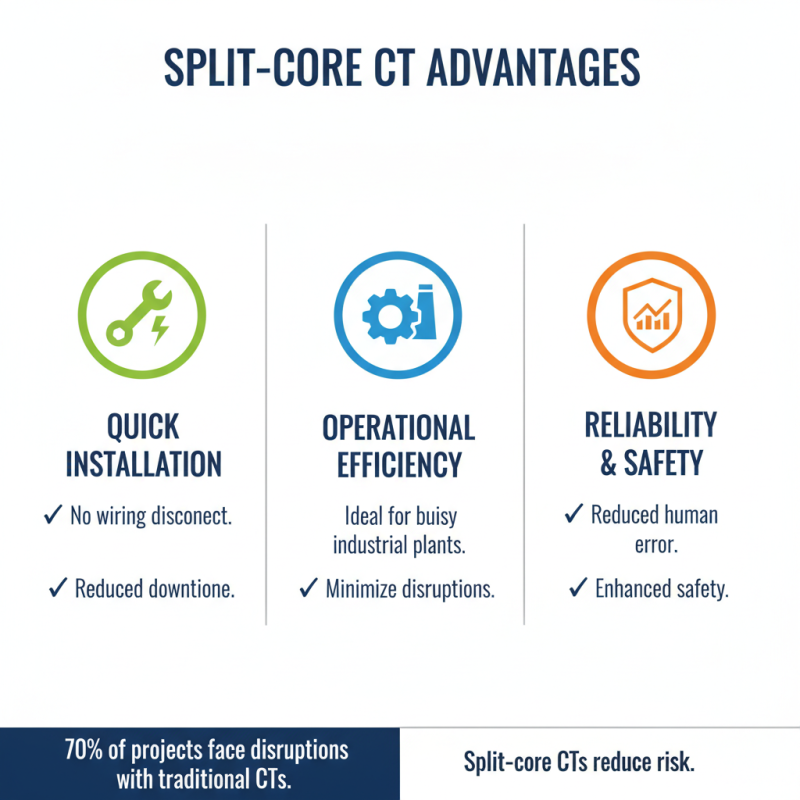
Split core current transformers (CTs) offer distinct advantages over traditional CTs, particularly in electrical measurements. They are designed for quick installation without disconnecting existing wiring. This feature is essential in busy environments like industrial plants. According to industry data, approximately 70% of electrical measurement projects face disruptions during installation. Split core CTs minimize this risk and enhance operational efficiency.
Additionally, the accuracy of split core CTs is noteworthy. They typically boast a measurement precision of ±1%, making them suitable for critical applications. Traditional CTs, while reliable, often incur significant errors due to core saturation and positioning challenges. A recent report highlighted that up to 30% of traditional CTs underperform due to misapplications. Installing split core CTs can help alleviate these issues, providing more reliable data.
However, there are considerations when choosing split core CTs. They may not perform as well in environments with high electromagnetic interference. This limitation can affect measurement accuracy. As a result, it’s important to evaluate the specific requirements of your project. Some applications still favor traditional styles for their proven reliability in adverse conditions. Balancing these factors is key in making an informed choice.
Best Practices for Using Split Core CTs in Electrical Testing
Split core current transformers (CTs) have become essential tools for electrical measurements. Their design allows for easy installation without disconnecting wiring, making them user-friendly. However, understanding best practices is crucial for accurate results. Proper positioning is one such key factor. A CT placed incorrectly can lead to erroneous readings. This issue can cause significant discrepancies in data collection, reinforcing the need for careful setup.
Calibration is another critical aspect. It's essential to ensure that your split core CTs are calibrated according to industry standards. Studies indicate that up to 30% of measurement errors come from improper calibration. Regular testing and validation against known reference values can help mitigate these errors and enhance reliability. Always maintain a log of calibration dates and results to monitor performance over time.
Additionally, consider the environmental factors that can impact readings. Temperature fluctuations can affect sensor accuracy. Acknowledging these variables is essential for effective testing. Regular maintenance and thorough inspections of your CTs will help identify potential problems. Being proactive in these areas can significantly improve the accuracy of your electrical measurements.
Electrical Measurements Using Split Core CT
This chart illustrates various electrical measurements taken using Split Core CTs. The measurements include Current, Voltage, Power, Frequency, and Energy, which are critical parameters in evaluating electrical performance and efficiency.
 X
X