How to Use Current Transducer in Electrical Measurement Systems?
In modern electrical measurement systems, the role of current transducers is pivotal. According to a recent industry report by the International Electrotechnical Commission (IEC), the demand for precise current measurement solutions has increased by 30% over the last five years. Current transducers provide vital data for monitoring and controlling electrical systems effectively. They convert the input current into a proportional output voltage or current, ensuring accuracy in measurements.
Dr. Emily Nguyen, a leading expert in electrical engineering, states, "Current transducers are essential for achieving reliable measurements in various applications." This sentiment reflects the growing recognition of these devices in enhancing system efficiency, safety, and performance. However, selecting the appropriate current transducer for specific applications remains challenging. Misalignment in specifications can lead to inaccurate readings, which may result in unsafe operational conditions.
Moreover, technological advancements have opened avenues for innovative transducer designs. One must contemplate the balance between cost and performance. Striving for accuracy often comes with trade-offs. As industries evolve, understanding how to effectively integrate current transducers into measurement systems becomes essential for engineers and technicians alike. They must continuously evaluate their choices, ensuring that they meet both operational requirements and regulatory standards.

Understanding the Basics of Current Transducers in Measurement Systems
Current transducers play a critical role in modern electrical measurement systems. These devices convert current into a proportional voltage or current signal, making it easier to monitor and analyze electrical parameters. In fact, industry reports indicate that the global current transducer market is expected to grow at a CAGR of over 8% between 2023 and 2030. This growth is driven by the increasing demand for energy-efficient solutions and precise monitoring.
Understanding the basics of current transducers involves knowing their operating principles. They typically use Hall Effect or Rogowski coil technologies. Hall Effect transducers are known for their high accuracy and quick response times. They can measure both AC and DC currents, offering versatility in applications. Conversely, Rogowski coils excel in measuring large AC currents with less distortion. However, they require additional processing for accuracy adjustments. Inherent limitations exist in both technologies, highlighting the need for careful selection based on the application.
When integrating current transducers into measurement systems, accuracy and environment matter. External factors, such as temperature fluctuations, can affect performance. Furthermore, improper installation may lead to errors. Therefore, regular calibration and maintenance are essential for optimal functionality. Despite advancements, the industry still faces challenges in achieving universal solutions that cater to diverse measurement needs.
How to Use Current Transducer in Electrical Measurement Systems? - Understanding the Basics of Current Transducers in Measurement Systems
| Measurement Parameter |
Current Range |
Output Signal Type |
Accuracy (%) |
Operating Temperature (°C) |
| AC Current Measurement |
0-100 A |
Voltage Output (0-10 V) |
±1.0 |
-10 to 60 |
| DC Current Measurement |
0-50 A |
Current Output (4-20 mA) |
±0.5 |
-20 to 70 |
| Differential Current |
0-25 A |
Current Output (0-5 V) |
±0.5 |
-10 to 50 |
| Three-phase Current |
0-150 A |
Voltage Output (0-10 V) |
±1.5 |
-20 to 60 |
Different Types of Current Transducers and Their Applications
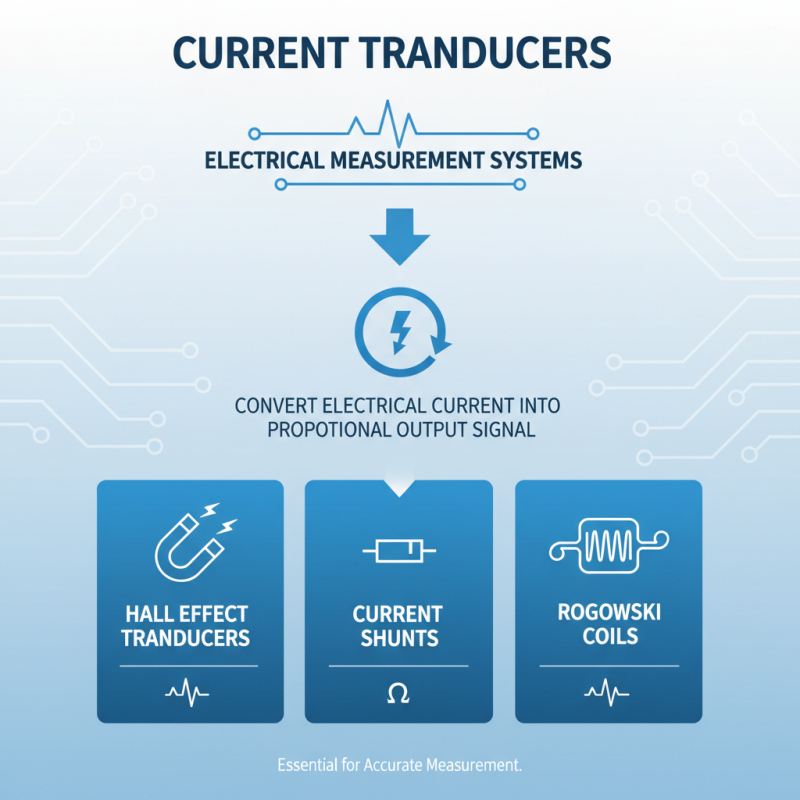
Current transducers play a vital role in electrical measurement systems. They convert electrical currents into a proportional output signal. The most common types include Hall effect transducers, current shunts, and Rogowski coils.
Hall effect transducers are widely used in industrial applications. They offer non-intrusive measurements, providing safety and accuracy. According to industry data, Hall effect sensors contribute to about 30% of the current transducer market. They are essential in electric vehicle applications and renewable energy systems, ensuring efficient current monitoring.
Current shunts are another popular option. They provide a direct way to measure high currents. Shunts are simple and cost-effective. However, they can introduce measurement errors if not calibrated properly. Industry reports highlight that shunt-based systems account for approximately 40% of current measurement devices in use.
Rogowski coils excel in measuring alternating currents. They are lightweight and flexible, suitable for varying applications. In power quality assessments, they help track harmonics and transients. While ideal for AC measurements, they can be less effective for DC, leading to potential inaccuracies.
**Tips:**
Choose the right transducer based on your application needs. Check compatibility with the measurement system. Regular calibration is essential to maintain accuracy over time.
Key Technical Specifications of Current Transducers to Consider
When considering current transducers, key technical specifications are crucial. The measurement range needs careful attention. It's essential to select a transducer that can handle the maximum expected current. Too high or too low a range can lead to inaccuracies. Sensitivity is another vital factor. It determines how well the transducer detects small changes in current. A higher sensitivity allows for more precise measurements.
Isolation voltage is equally important. It ensures safety in electrical systems. High isolation voltage helps protect user equipment from spike currents. Additionally, frequency response should not be overlooked. Some transducers excel at low frequencies while others perform better at high frequencies. Testing the frequency response in your specific application can be enlightening.
Lastly, consider the output type of the transducer. Options like analog or digital outputs can affect system integration. Sometimes a transducer may not fit smoothly with existing equipment. These details matter. A small oversight could lead to significant measurement errors. Always review the specifications carefully.
Integrating Current Transducers into Electrical Measurement Circuits
Integrating current transducers into electrical measurement circuits can be pivotal for accurate results. These devices convert electrical current into proportional voltage or current signals. This is critical in applications like monitoring and control systems. A proper understanding of the transducer's specifications is necessary for effective integration.
When selecting a current transducer, pay attention to the range and sensitivity. It’s easy to overlook how these factors impact accuracy. A transducer with too wide a range may not give precise measurements in low current scenarios. Consider also the physical mounting. Proper placement affects signal integrity significantly.
Calibration must not be ignored. Regular adjustments will ensure continued precision. This process can be tedious but is essential for reliable readings. Some might rush through this step, leading to discrepancies in data. Regular checks can help identify issues before they escalate. It’s all about finding the right balance between speed and accuracy in your setup.
Best Practices for Calibration and Maintenance of Current Transducers
Calibration and maintenance of current transducers are critical for accurate electrical measurements. Regular checks ensure reliability in your system. Without proper calibration, readings may drift over time. This can lead to potential errors.
Tips: Schedule calibrations annually. Maintain a detailed log of each calibration session. This promotes accountability and traceability in your measurement process.
Regular maintenance is equally essential. Inspect connections and wiring frequently. Loose connections can introduce noise. Clean sensors to prevent dust buildup. It's easy to overlook sensor cleanliness, but this impacts performance.
Tips: Use compressed air for cleaning. Avoid aggressive chemicals that may damage components. Document maintenance activities for future reference. This helps in identifying recurring issues and finding solutions.
 X
X