2026 Top Trends in Split Core Current Sensors for Energy Management?
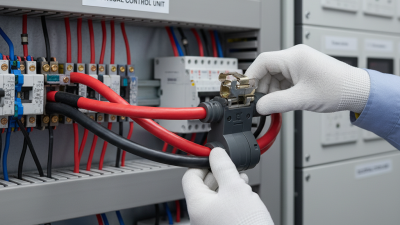
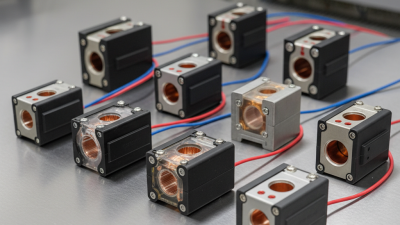
As we move toward 2026, the need for efficient energy management grows. The split core current sensor stands out as a key technology in this field. These sensors enable precise monitoring of electrical currents with minimal disruption. Their design allows for easy installation around existing wires, eliminating the need for system shutdowns.
In recent years, the demand for split core current sensors has surged. This trend reflects the increasing focus on energy efficiency in various sectors. Businesses and homeowners are seeking sustainable options and ways to reduce costs. Split core current sensors play a significant role in smart building applications, allowing for real-time energy usage tracking. However, the market still faces challenges, including sensor accuracy and integration issues with older systems.
Investing in this technology requires careful consideration. The potential benefits are clear, but users must remain vigilant about compatibility and installation standards. Overall, split core current sensors represent promising advancements, even if their implementation can be complex. Understanding their developments and trends will help drive future innovations in energy management.
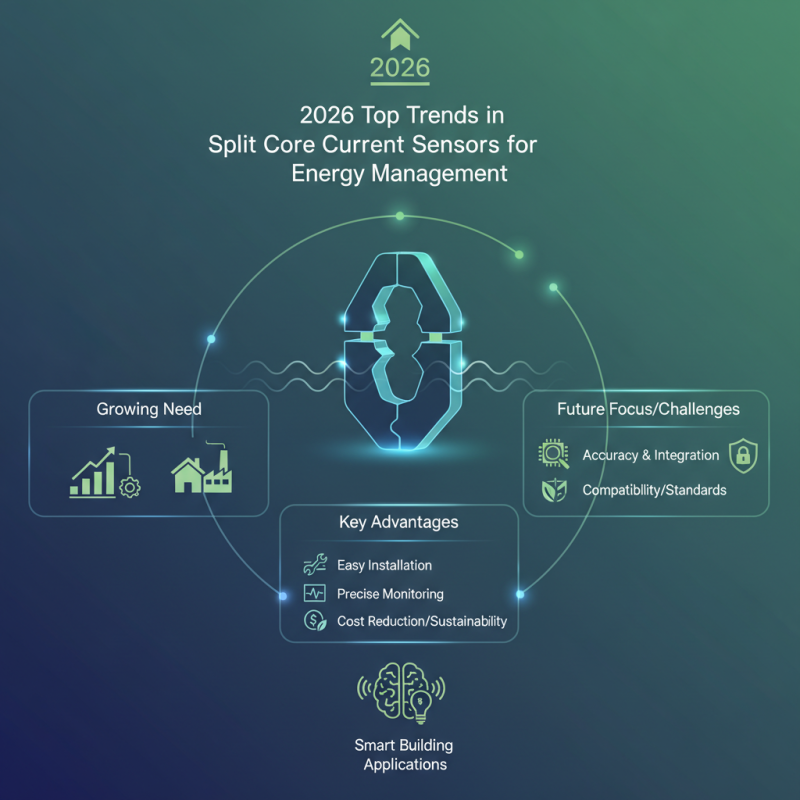
Emerging Technologies in Split Core Current Sensors for 2026
As we look toward 2026, split core current sensors will play a pivotal role in energy management. The emergence of new technologies will enhance efficiency. These sensors need to become more accurate and reliable. Users want sensors that provide real-time data. This data will help optimize energy usage across various applications.
Tips: Always consider installation ease. The simpler the setup, the better. Look for sensors that offer customization options. Tailoring features can lead to better performance in specific environments.
In 2026, we may see wireless connectivity integrated into split core sensors. This will allow for seamless data transmission to cloud platforms. However, the challenge remains to ensure data security. Concerns about privacy and unauthorized access are valid. As these technologies evolve, so must our approaches to safeguarding them.
Tips: Regular software updates are crucial. Keep systems secure with the latest patches. Educate users on recognizing potential security threats. Awareness can help mitigate risks effectively.
2026 Top Trends in Split Core Current Sensors for Energy Management
This chart illustrates the projected trends in different applications of split core current sensors for energy management in 2026, showcasing the increasing adoption of these sensors in various sectors.
Key Trends Driving Energy Management Strategies
As we look towards 2026, the trends in split core current sensors are shaping energy management strategies. One prominent trend is the growing demand for real-time monitoring. Organizations are increasingly focused on understanding energy consumption patterns. This real-time data can lead to smarter, more efficient energy use. However, some systems still struggle with integration and user friendliness.
Another key trend is the rise of IoT-enabled sensors. These smart devices enable connectivity and data sharing. They provide insights into energy usage that were previously unavailable. Yet, some users find it challenging to interpret this data effectively. Complexity can be a barrier, leading to missed opportunities for optimization.
Energy management strategies are also evolving with sustainability in mind. Companies are looking to reduce carbon footprints while optimizing costs. Split core current sensors play a vital role in this transition. But, organizations must also reflect on their implementation processes. The balance between technology and human decision-making often needs improvement.
2026 Top Trends in Split Core Current Sensors for Energy Management
| Trend |
Description |
Impact on Energy Management |
Projected Adoption Rate (%) |
| Increased Integration with IoT |
Split core sensors are increasingly being integrated with IoT platforms for real-time monitoring. |
Enhances data collection for improved decision-making. |
75% |
| Focus on Energy Efficiency |
Companies are emphasizing energy-efficient technologies to reduce overall consumption. |
Leads to cost savings and sustainability goals. |
80% |
| Adoption of Machine Learning |
Using machine learning to analyze data from current sensors for predictive maintenance. |
Improves system reliability and reduces downtime. |
70% |
| Wireless Technology Adoption |
Increasing use of wireless split core sensors for easier installation and flexibility. |
Facilitates retrofitting and reduces installation costs. |
65% |
| Regulatory Compliance |
Heightened regulations regarding energy consumption necessitate advanced monitoring tools. |
Ensures compliance, leading to potential penalties and enhanced reporting. |
85% |
Advancements in Sensor Accuracy and Reliability
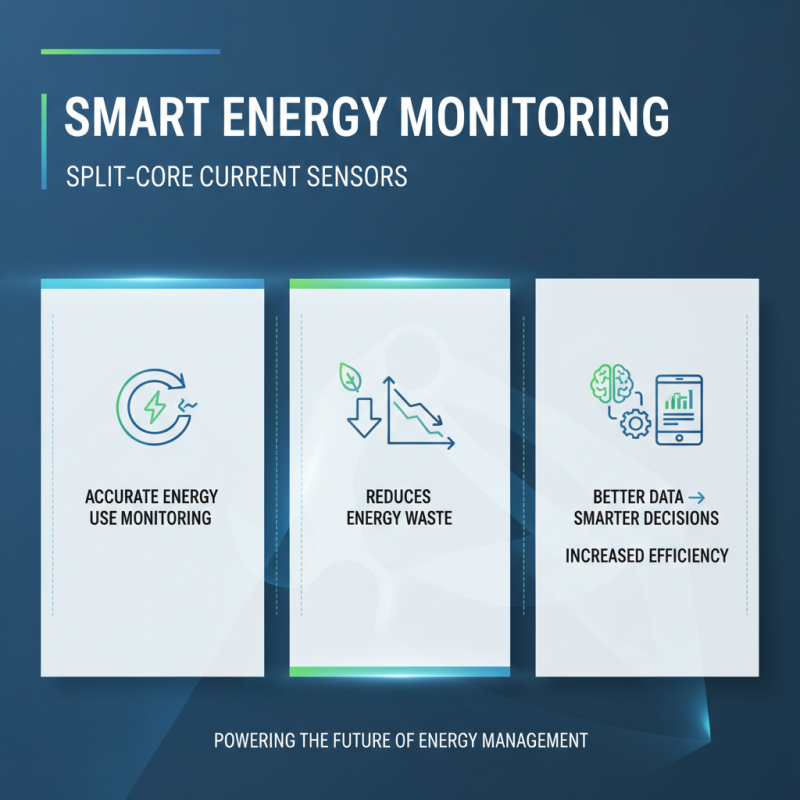
In the rapidly evolving landscape of energy management, advancements in split core current sensors are noteworthy. These sensors are essential for monitoring energy use accurately. Their role in reducing energy waste cannot be overstated. Improved sensor accuracy means better data collection. This data drives energy-saving decisions and enhances efficiency in various sectors.
Reliability is another vital aspect. Consumers expect sensors that won’t fail. A reliable sensor minimizes downtime and maintenance costs. However, not all sensors meet these demands. Some still struggle with fluctuating loads or environmental interference. This inconsistency raises questions about their effectiveness. Engineers continuously work to address these challenges, pushing the boundaries of sensor technology forward.
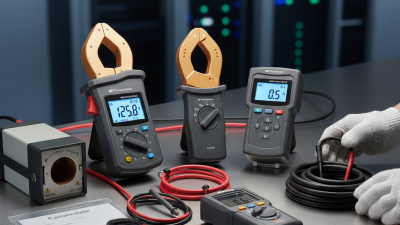
The calibration process plays a critical role in sensor accuracy. Proper calibration ensures precise readings. Neglecting this step can lead to significant errors. Additionally, while technology advances, some users may resist adopting new methods. The transition requires training and adjustments in existing workflows. It's important to remember that every improvement also brings new hurdles.
Integration of IoT with Split Core Current Sensors
The integration of IoT with split core current sensors is transforming energy management. According to recent industry reports, the global IoT market is projected to reach $1.1 trillion by 2026, significantly impacting energy efficiency practices. Split core sensors provide a non-intrusive solution for monitoring electrical consumption in real-time. They are easy to install and can be employed across various applications.
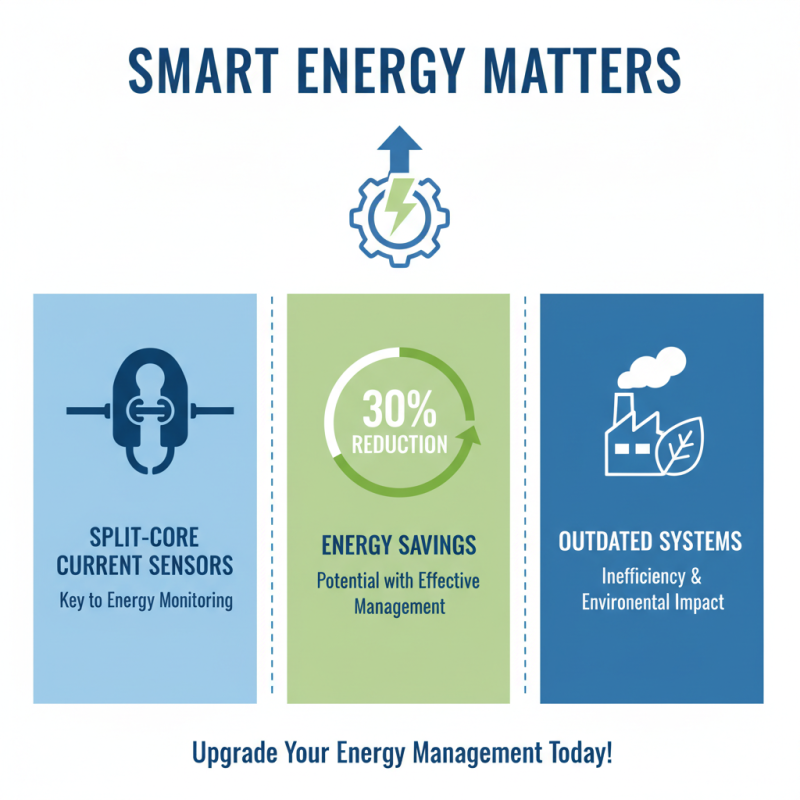
Data acquisition is critical in energy management. IoT-enabled split core current sensors facilitate continuous monitoring and data collection. This integration offers actionable insights into energy usage patterns. Industries can save up to 30% on energy costs by employing these technologies. However, the accuracy of data collection remains a concern. Inconsistent readings can lead to poor decision-making.
Security issues are also present. As more devices connect to the IoT ecosystem, vulnerabilities increase. Ensuring robust cybersecurity measures is essential. Users must remain vigilant about potential data breaches. The journey of optimizing energy management through IoT and split core sensors involves not just innovation but also continuous improvement and adaptation.
 X
X