Top 10 CT Sensor Suppliers for Global Buyers?
Choosing a ct sensor supplier requires more than comparing unit prices. Global buyers need dependable measurement, clear documentation, and stable production capacity. This guide examines ten established suppliers serving industrial, energy, automation, and monitoring applications. It considers current transformers, split-core designs, metering units, protection models, and custom assemblies. Real purchasing decisions often begin with a small detail: the sensor’s aperture must fit the installed cable. A minor mismatch can delay an entire project.
Each supplier is assessed through practical criteria. These include accuracy class, rated current, frequency range, insulation performance, response time, and operating temperature. Certifications matter, but certification alone does not prove field suitability. Buyers should request test reports, sample units, dimensional drawings, and lifecycle information. Lead times, minimum order quantities, communication quality, and after-sales support also influence risk. Engineers should compare performance at actual loads, not only headline specifications. Fit matters.
The list is designed as a starting point, not a final verdict. Supplier rankings can change with region, industry, and project volume. No datasheet reveals every installation challenge. That is worth remembering. Factory audits and pilot testing may expose issues before mass deployment. The strongest partner combines repeatable quality with honest technical advice. This review aims to help procurement teams ask sharper questions and select sensors with greater confidence.

What Are CT Sensors and How Do They Work?
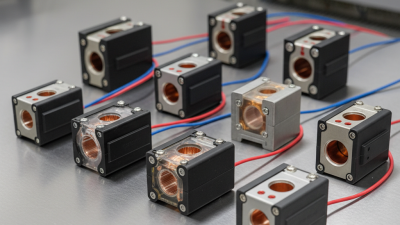
A current transformer sensor, or CT sensor, measures alternating current without placing a meter directly in the high-current path. Its primary conductor passes through or beside a magnetic core. The current creates a magnetic field, and the core transfers that energy to a secondary winding. The secondary produces a smaller, proportional current for a meter, relay, or monitoring device.
It is a practical arrangement. A cable carrying 500 amperes may produce only 5 amperes on the secondary side, depending on the transformation ratio. A burden resistor can convert this output into a measurable voltage.
Split-core designs clamp around existing cables, while solid-core models usually require cable disconnection during installation. In field work, correct cable positioning matters. A conductor placed off-center can introduce avoidable measurement error.
CT sensors mainly measure AC, not steady DC. Buyers should check ratio, accuracy class, frequency range, insulation level, aperture size, and rated burden. The sensor must match the connected instrument.
Never leave a conventional CT secondary open while current flows through the primary. Dangerous voltage may develop. This detail is often underestimated.
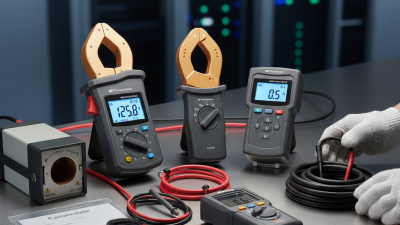
Digital CT sensors may provide voltage outputs or communication signals, but extra electronics can create new failure points. Temperature, vibration, nearby magnetic fields, and loose terminals also affect readings. A supplier may provide impressive specifications, yet installation conditions can tell a different story. Verification with a calibrated reference is wise, although it is not always performed on busy sites.
Key Criteria for Evaluating Global CT Sensor Suppliers
Top 10 CT Sensor Suppliers for Global Buyers?
Key Criteria for Evaluating Global CT Sensor Suppliers
Global buyers should evaluate CT sensor suppliers beyond catalog prices. The International Energy Agency’s Electricity 2024 report forecasts global electricity demand growth of about 4% in 2024 and 3.3% in 2025. This expansion increases pressure on measurement accuracy, delivery stability, and grid monitoring.
Start with technical evidence. Check accuracy class, phase error, burden, saturation performance, frequency range, and insulation ratings. IEC 61869-2 provides important requirements for current transformers. A capable supplier should provide type-test reports, calibration records, and traceable measurement data. Ask for results at low, rated, and overload currents. One nominal accuracy figure is not enough.
Manufacturing control matters equally. ISO 9001 certification can indicate a structured quality system, but it does not guarantee perfect sensor performance. Review process controls, failure rates, corrective-action records, and sample inspection methods. The International Energy Agency’s World Energy Outlook 2024 also highlights continuing investment in electricity networks, making long-term supply capacity important. Confirm lead times, regional technical support, replacement policies, and production-site resilience. Environmental testing should cover temperature cycling, humidity, vibration, and electromagnetic conditions. Do not ignore installation details. A sensor that performs well in a laboratory may drift inside a crowded cabinet. No checklist is perfect. Buyers should test real operating conditions before approving large orders.
Top CT Sensor Suppliers for International Buyers
Top 10 CT Sensor Suppliers for Global Buyers
Top CT Sensor Suppliers for International Buyers
Choosing among the top ten CT sensor suppliers requires more than comparing unit prices. International buyers should examine measurement range, accuracy class, insulation rating, frequency response, and operating temperature. Experienced suppliers can explain sensor behavior inside a crowded switchboard, not only on a laboratory sheet.
Request recent test reports, calibration records, dimensional drawings, and traceability documents. Check whether samples match mass production units. Ask about minimum order quantities, annual capacity, packaging, export documents, and realistic lead times. For a 5,000-piece project, a 30-day promise means little without a written production schedule. Technical support across time zones also matters when prototypes fail during commissioning.
No supplier is perfect. Details matter. A polished website cannot replace verified performance. Test samples under low current, rated current, and short overload conditions. Record heat rise and output drift. Connector fit after vibration is easy to miss. Buyers may also underestimate communication delays when drawings change late. A clear change-control process reduces that risk. Price still matters, but inconsistent cores, unclear tolerances, and weak after-sales support can cost more than the sensor.
Top 10 CT Sensor Suppliers for Global Buyers
Common nominal primary-current ratings used in international CT sensor specifications
This buyer-reference chart compares ten widely used nominal primary-current ratings, ranging from 5 A to 2,000 A.
These ratings are commonly used when evaluating current transformers for metering, protection, industrial automation, and power-distribution applications.
Actual product availability, accuracy class, insulation level, burden, and compliance requirements vary by application and region.
Comparing CT Sensor Types, Features, and Applications
Top 10 CT Sensor Suppliers for Global Buyers?
Comparing CT Sensor Types, Features, and Applications
Current transformer sensors differ in structure, accuracy, installation method, and suitable operating conditions. Solid-core CT sensors usually provide stable readings and strong accuracy, making them suitable for permanent switchboards and power distribution panels. Split-core models open around existing cables, so technicians can retrofit monitoring without disconnecting conductors. Installation is faster. However, their core gap may reduce accuracy if the sensor is poorly closed.
Flexible Rogowski coil sensors handle large conductors and crowded cabinets with greater convenience. They measure alternating current across wide ranges but require an external integrator. Conventional CT sensors can support protection systems, energy meters, and industrial control equipment. Buyers should compare rated current, frequency range, phase error, insulation level, burden, and output type. A sensor with impressive accuracy may still perform poorly when the cable size is mismatched.
Tips: Check the conductor diameter before ordering. Confirm whether the system needs a current output, voltage output, or digital interface. Review calibration documents and test conditions, not only headline accuracy. In practical audits, loose mounting and incorrect polarity often cause misleading data. I have also found that compact sensors can create installation problems when terminal clearance is ignored. Environmental details matter: heat, vibration, dust, and moisture may change long-term performance. A careful supplier should explain these limits clearly.
How to Select and Purchase the Right CT Sensor Supplier
Selecting a CT sensor supplier starts with the measurement task, not the catalog. Define primary current, secondary output, frequency, burden, accuracy class, and installation space. A 5 A secondary may suit a relay, while a low-power output may fit compact monitoring equipment. Check saturation behavior under fault current. Ask for curves, not only headline accuracy. Small omissions become expensive later.
Request a controlled sample before placing a large order. Test it with your actual conductor size, enclosure, temperature range, and connected meter. Verify phase error, insulation performance, connector strength, and output stability. Review calibration records and traceability to recognized laboratories. A capable supplier should explain tolerances in plain technical language. If answers remain vague, pause the purchase. Delivery dates, minimum order quantities, tooling fees, replacement policy, and engineering support also matter. The cheapest quote can hide integration work.
Compare suppliers with a weighted checklist rather than price alone. Give practical weight to documented quality controls, production capacity, inspection methods, and response time. Confirm whether design changes require approval and whether drawings remain revision-controlled. Ask how failed units are contained and reported. Do not rely on a polished sample; production consistency is harder to prove. Field reviews often show suitable sensors becoming unsuitable after a connector or mounting revision. That risk deserves a written control plan. Keep one unresolved question visible, too. It may reveal the supplier you overlooked.
 X
X