Top Tips for Choosing the Best Rogowski Current Probe?
When selecting the best Rogowski current probe, understanding the variety of options available is crucial. A Rogowski current probe is a flexible, non-intrusive device used for measuring alternating current. Their unique design allows them to provide accurate measurements, making them essential for electrical engineers and technicians.
However, not all Rogowski current probes are created equal. Selecting the right one can be challenging. Factors such as bandwidth, sensitivity, and output signal must be considered. There is a wide range of specifications across different models. This makes it necessary to reflect on your specific needs.
In this guide, we aim to provide practical tips and considerations. Choosing the right Rogowski current probe can significantly impact your measurements. It is essential to approach this decision thoughtfully. Doing so can enhance your work’s accuracy and reliability. Stay informed and make choices that align with your project requirements.
Understanding the Basics of Rogowski Current Probes
Rogowski current probes are essential for measuring alternating current. They are flexible, non-intrusive, and can handle large currents without saturation. Understanding their design helps users make informed decisions. These probes consist of a coil wrapped around a conductor. The output voltage is proportional to the derivative of the current. This relationship is key to their operation.
Choosing the right probe requires knowledge of specifications. Bandwidth, sensitivity, and maximum current ratings are crucial factors to consider. Users must also think about their application environment. This includes temperature, electromagnetic interference, and physical space. The ideal probe should not only meet technical requirements but also be durable.
Reliability in readings often depends on the probe's calibration. Improper calibration can lead to significant errors, which might go unnoticed. Users should regularly verify their tools and stay aware of potential drift in performance. Such attention to detail ensures accurate and trustworthy measurements over time. Understanding these fundamentals fosters better decision-making when selecting a Rogowski current probe.
Top Tips for Choosing the Best Rogowski Current Probe
| Feature |
Description |
Importance Rating (1-5) |
| Sensitivity |
Ability to detect small currents accurately. |
5 |
| Frequency Response |
Range of frequencies the probe can accurately measure. |
4 |
| Size and Flexibility |
Physical dimensions and ease of handling the probe. |
3 |
| Calibration |
Frequency and accuracy of calibration procedures. |
5 |
| Build Quality |
Durability and materials used in construction. |
4 |
| Output Signal |
Type and quality of the signal outputted by the probe. |
4 |
| Price |
Value for money based on features offered. |
3 |
Key Features to Consider When Selecting a Rogowski Probe
When choosing a Rogowski current probe, certain features stand out. Sensitivity is crucial. A probe with higher sensitivity will detect smaller currents effectively. Be mindful that too high sensitivity may lead to noise interference. This balance is vital for accurate readings.
Another feature to consider is the frequency response. Probes vary in their ability to handle different frequency ranges. Ensure the probe matches the specific application. Some probes may excel in low frequencies but falter at higher ones. Think about the environment where you’ll use the probe.
A practical tip is to evaluate the probe's construction. Look for robust materials that withstand wear and tear. This affects durability significantly. Lightweight probes are easier to handle, yet they must remain sturdy. Consider the calibration process as well. It should be straightforward and reliable for ongoing use. Ultimately, finding the right Rogowski current probe is a balance of features and application needs.
Evaluating Probe Sensitivity and Frequency Response
When selecting a Rogowski current probe, evaluating probe sensitivity and frequency response is crucial. Sensitivity indicates how effectively a probe can detect low-level currents. A higher sensitivity allows for better resolution in measuring fluctuating signals. Check the specifications. Look for probes that specify their sensitivity range clearly. Not all probes have the same level of responsiveness.
Frequency response is another vital factor. It defines how well the probe can capture signals across various frequencies. A good current probe should have a flat response over a wide frequency range. This characteristic ensures accurate measurements for both steady-state and transient conditions. Pay attention to the bandwidth specification. Probes with narrower bandwidth may not perform well for high-frequency signals.
Keep in mind that the ideal probe often requires a balance between sensitivity and frequency response. A highly sensitive probe might have a limited frequency range, and vice versa. This trade-off can affect measurement accuracy. Therefore, it’s essential to assess your specific application needs. Understand the conditions in which you will use the probe and choose accordingly.
Assessing Compatibility with Measurement Equipment
When selecting a Rogowski current probe, compatibility with your measurement equipment is crucial. Various studies show that improper pairing can lead to inaccuracies in readings. For instance, a recent report from the IEEE highlighted that up to 30% of measurement errors stem from mismatched equipment. Ensuring that your Rogowski probe functions seamlessly with your devices can save time and reduce costs.
One tip is to check the probe's frequency response against your measurement system. Many probes operate optimally within specific bandwidths. If your application involves high-frequency measurements, ensure the probe can handle these ranges. Additionally, some probes perform poorly near the limits of their specifications. It's wise to consult technical documentation or reach out to industry professionals for insights.
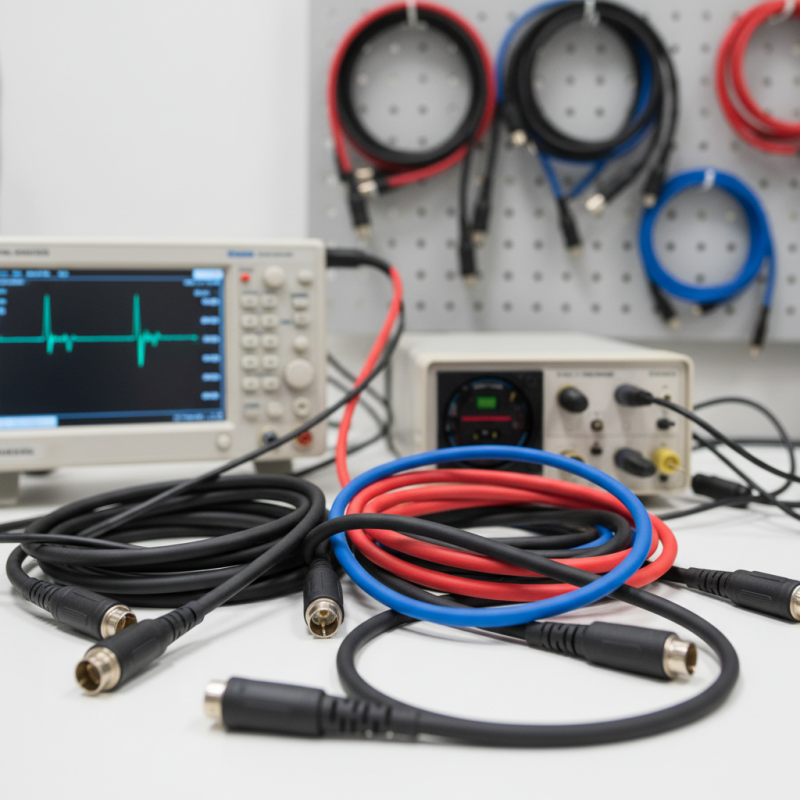
Another key consideration is the output signal type. Some Rogowski probes output voltage signals, while others may provide current. Make sure your measurement equipment can interpret the probe's output correctly. If there's any doubt, it might be beneficial to conduct preliminary testing. Proper equipment compatibility doesn’t just enhance accuracy; it increases reliability in critical applications across various sectors.
 X
X