X
X
X
X When it comes to measuring electric current with precision and reliability, choosing the right Hall Effect current sensor is critical. These sensors provide a non-invasive method for current measurement by utilizing the Hall effect principle, which allows for accurate detection of magnetic fields generated by current-carrying conductors. However, with a plethora of options available in the market, selecting the best Hall Effect current sensor to meet your specific needs can be a challenging task.
This article aims to guide you through the essential factors to consider when choosing a Hall Effect current sensor. From understanding the technical specifications to evaluating operational requirements, we’ll cover the key aspects that will help you make an informed decision. Whether you are designing a new application or replacing an existing sensor, the right choice will ensure optimal performance and longevity, ultimately contributing to the efficiency of your electrical system. By following these top 10 tips, you will be equipped with the knowledge needed to navigate the complexities of Hall Effect current sensor selection effectively.
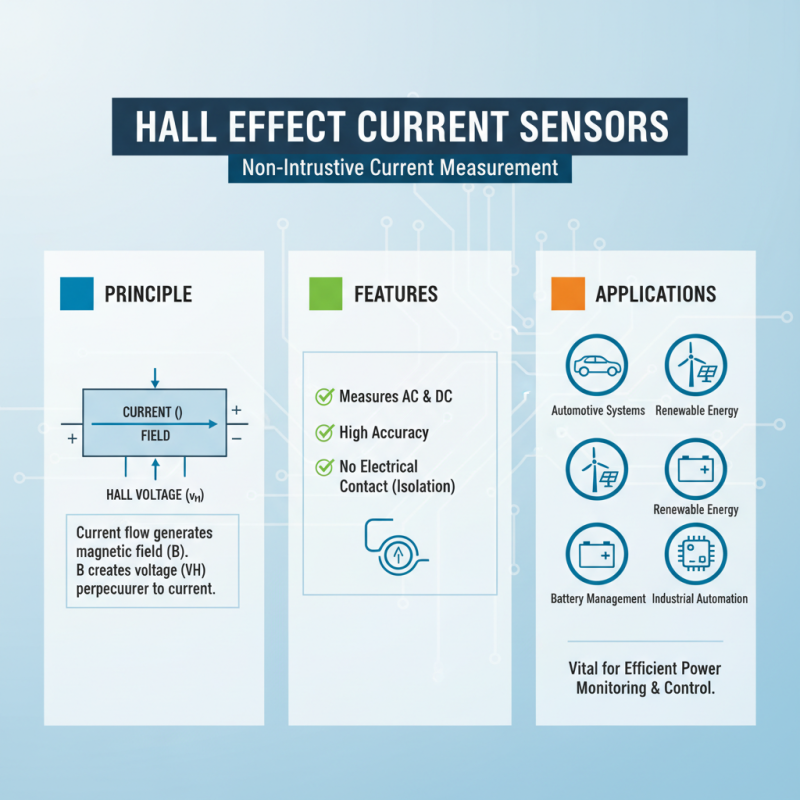
Hall Effect current sensors are vital components used in a variety of applications, from automotive systems to renewable energy management. These sensors operate based on the Hall effect principle, which involves the generation of a voltage difference across a conductor when it is exposed to a magnetic field. As electrical currents flow through the conductor, they create a magnetic field that the sensor detects, allowing for precise measurement of current flow. This technology is highly valued for its ability to measure both AC and DC currents with a high level of accuracy and is increasingly used in applications requiring non-intrusive current measurement.
According to recent industry reports, the global Hall Effect current sensor market is projected to grow significantly, with a compound annual growth rate (CAGR) of over 7% from 2021 to 2026. This growth is attributed mainly to the rising demand for energy-efficient solutions and advancements in electric vehicle technology. Additionally, Hall Effect sensors offer several advantages, including high linearity, immunity to interference from electromagnetic noise, and the ability to operate across a wide temperature range, making them ideal for harsh environments. As applications become more diverse and complex, understanding the operational characteristics and capabilities of these sensors is essential for selecting the right one to meet specific needs.
When selecting a Hall Effect current sensor, specific key specifications must be prioritized to ensure optimal performance for your application. One of the primary specifications is the sensing range, which determines the maximum and minimum current levels the sensor can accurately measure. A comprehensive industry report highlights that the most demanded sensing ranges for industrial applications typically fall between ±25A to ±200A, indicating the diverse requirements across varying sectors. Understanding your application’s current range is vital as it directly impacts the sensor's efficiency and reliability.
Another important specification to consider is the output type of the Hall Effect sensor. Generally, sensors can provide analog or digital output, with analog sensors being favored for continuous current measurements due to their linear response characteristics. According to a recent market analysis, approximately 60% of engineers prefer analog outputs for their ease of integration in feedback loops, particularly in automation and control systems. Furthermore, the response time and accuracy of the sensor are critical parameters; the preferred response times for most applications are sub-millisecond, ensuring real-time performance in dynamic environments. Selecting a sensor with optimal specifications in these areas will greatly enhance the effectiveness and reliability of your current sensing system.
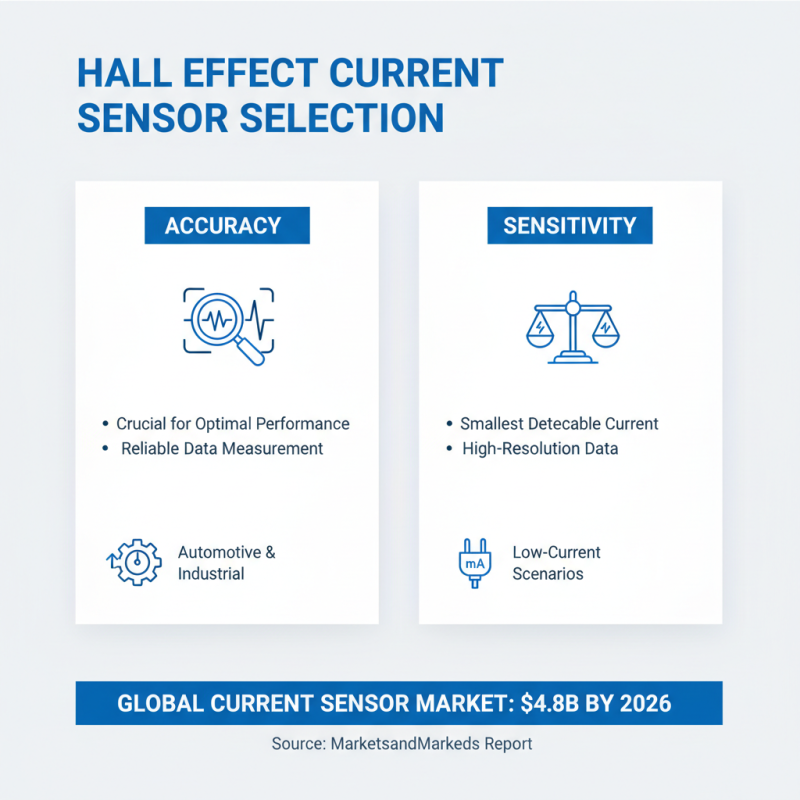
When selecting a Hall Effect current sensor, accuracy and sensitivity are the crucial parameters that must be evaluated to ensure optimal performance in various applications. According to an industry report by MarketsandMarkets, the global current sensor market is projected to reach $4.80 billion by 2026, reflecting the growing demand for precise measurement technologies in automotive and industrial applications. Sensitivity defines the smallest current that can be accurately detected, making it vital for applications requiring high-resolution data. A sensor with high sensitivity will yield reliable performance in low-current scenarios, ensuring that critical loads are monitored effectively.
One of the essential tips for choosing a Hall Effect current sensor is to consider the sensor's linearity, which impacts the accuracy of current readings across its operating range. Non-linearity can lead to significant errors in measurement, particularly in systems that rely on precise control and monitoring. Additionally, understanding the temperature coefficient of the sensor is essential, as temperature variations can affect its readings. For instance, a temperature coefficient of <0.1%/°C is highly desirable, ensuring minimal drift in accuracy with changing environmental conditions.
Moreover, carefully assessing the frequency response is also pivotal. The ability of the sensor to accurately follow changes in current over time is crucial, especially in applications that involve dynamic loads. A sensor that can maintain accuracy at higher frequencies will be more suited for applications in power electronics and motor control. As the demand for high-performance current sensing solutions continues to rise, making informed decisions based on these evaluation criteria can lead to enhanced operational efficiency and reliability in your applications.
When selecting a Hall Effect current sensor, understanding the balance between cost and performance is critical. According to industry reports, the global Hall Effect sensors market is expected to grow significantly, reaching an estimated value of over $3 billion by 2025, driven by advancements in automation and automotive applications. Thus, choosing the right sensor involves assessing both upfront costs and the long-term value it delivers through efficiency, accuracy, and reliability.
Cost considerations often extend beyond the purchase price. A more expensive Hall Effect current sensor might offer higher precision and better thermal stability, leading to reduced maintenance and increased system efficiency. For instance, sensors with higher sensitivity and wider measurement ranges can significantly minimize errors in current sensing applications. Data indicates that high-performance sensors can reduce energy consumption in industrial environments by up to 20%, which may offset their initial cost over time. Therefore, it is essential to evaluate how a sensor's quality and specifications align with your specific application, as this could ultimately dictate your project's success and profitability.
When integrating Hall Effect current sensors into your systems, a thorough understanding of installation requirements is crucial for optimal performance. According to a report by MarketsandMarkets, the Hall Effect sensor market is projected to reach USD 2.9 billion by 2023, highlighting the growing usage of these devices in various applications. To ensure effective installation, consider the physical conditions of the environment where the sensor will be used. Factors such as temperature, humidity, and electromagnetic interference can significantly impact sensor accuracy and longevity.
Correct mounting practices are also vital. It is essential to adhere to the manufacturer's specifications for spacing and alignment to avoid errors in measurement due to misinterpretation of magnetic fields. A study from Frost & Sullivan emphasizes the importance of using appropriate shielding materials to minimize noise and enhance signal integrity. Additionally, proper cabling practices, including the use of twisted pairs and shielding, can prevent interference from adjacent electrical signals, thus ensuring the reliability of current measurements. These integration tips not only improve performance but also extend the operational lifespan of Hall Effect current sensors in your applications.
| Tip Number | Tip Description | Installation Consideration | Integration Aspect |
|---|---|---|---|
| 1 | Select the right sensing range | Ensure the range meets your application's current requirements | Verify compatibility with your circuit design |
| 2 | Consider temperature stability | Check the operational temperature range | Ensure sensor operates reliably in expected conditions |
| 3 | Review output signals | Select uniform output signal type (e.g., voltage or current) | Confirm compatibility with your data acquisition system |
| 4 | Evaluate response time | Ensure fast response is suitable for your application needs | Consider digital processing limits in your integration |
| 5 | Check the sensor package type | Choose a package that fits your PCB layout | Evaluate ease of installation and space constraints |
| 6 | Look for built-in protections | Ensure protection against short circuits and overloads | Plan for additional protective circuitry if needed |
| 7 | Review cost versus performance | Balance your budget with the required specifications | Ensure sufficient return on investment for integration |
| 8 | Investigate the sensor’s linearity | Choose a sensor with good linear characteristics | Validate performance across the specified range |
| 9 | Assess the manufacturer's support | Verify availability of technical support and documentation | Determine if training or additional resources are needed |
| 10 | Consider future scalability | Ensure the sensor can accommodate future upgrades | Plan for compatibility with evolving project requirements |