Why Choose a Three Phase Energy Meter for Your Business?
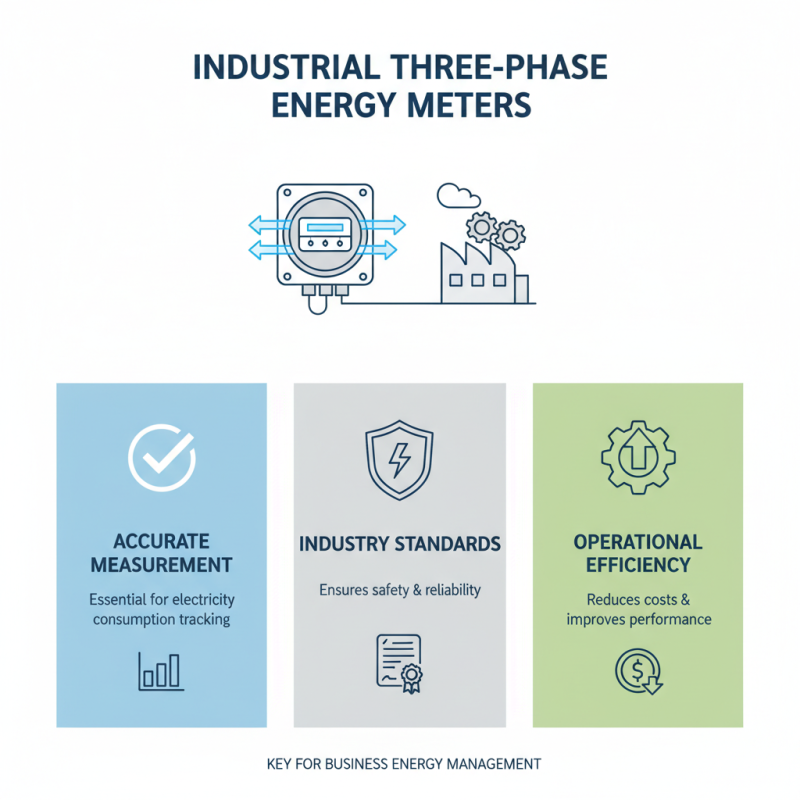
In today's competitive business landscape, energy management is crucial. Many enterprises face rising operational costs due to inefficient energy use. A three phase energy meter offers a solution to these challenges. According to the U.S. Department of Energy, optimized energy usage can reduce costs by up to 30%.
Investing in a three phase energy meter provides precise monitoring of energy consumption. These meters cater to large machinery and complex systems. A report by the International Energy Agency highlights that businesses can save significant amounts through advanced metering solutions. However, not all meters are created equal.
Some companies may overlook the accuracy or functionality of their energy meters. This oversight can lead to increased expenses and wasted resources. In a world driven by efficiency, such mistakes can be costly. Embracing a three phase energy meter can help businesses stay ahead and maximize savings. Identifying the right meter is essential for long-term success.
The Basics of Three Phase Energy Meters and Their Functionality
A three-phase energy meter is essential for many businesses. Unlike a single-phase meter, it measures electrical consumption across three phases. This setup is crucial for operations that require significant energy loads. Factories, for instance, often rely on three-phase power for heavy machinery. It ensures more efficient energy distribution.
The functionality of a three-phase energy meter is straightforward. It monitors voltage, current, and power factor. The data helps businesses track energy usage over time. They can identify peak usage periods and adjust accordingly. Understanding these patterns is vital for cost management. However, not all businesses grasp the importance. Some overlook the detailed reports. This can lead to higher energy bills unexpectedly.
Investing in advanced features can enhance tracking. For example, automated readings can eliminate human error. Yet, the initial investment may seem daunting. Businesses must weigh the benefits against the cost. Regular monitoring can reveal inefficiencies. Ignoring this may hamper growth.
Why Choose a Three Phase Energy Meter for Your Business? - The Basics of Three Phase Energy Meters and Their Functionality
| Feature |
Description |
Benefits |
| Accuracy |
Measures electricity consumption with high precision. |
Reduces billing errors and optimizes energy usage. |
| Load Management |
Tracks power usage across multiple phases. |
Improves efficiency and helps balance load across phases. |
| Data Logging |
Records historical energy data for analysis. |
Empowers businesses to make informed decisions on energy consumption. |
| Cost Efficiency |
Helps identify areas of wasted energy. |
Lowers overall energy costs and improves profitability. |
| Integration |
Compatible with energy management systems. |
Facilitates better monitoring and control of energy use. |
Understanding the Advantages of Three Phase Meters Over Single Phase Meters
When considering energy meters for your business, three-phase energy meters stand out. These devices are beneficial for companies with higher energy demands. Their ability to handle greater loads provides a reliable option for industries. A three-phase meter can measure power more effectively, ensuring accurate billing. This precision can lead to significant cost savings over time.
Many businesses overlook how three-phase meters reduce electrical losses. They distribute loads evenly across phases, leading to increased efficiency. This helps in maintaining balance and enhancing the lifespan of electrical equipment. A balanced load reduces overheating, which can be a common issue with single-phase systems. Consequently, businesses may experience fewer outages and reduced maintenance costs.
Another point to consider is monitoring capabilities. Three-phase meters often come with advanced features for tracking energy usage. Businesses can analyze patterns and optimize consumption. This can lead to better decision-making regarding energy efficiency. However, it is essential to ensure proper installation and calibration. A poorly set-up meter might deliver misleading data, counteracting its advantages. Careful attention is required to maximize the benefits of a three-phase energy meter.
Cost Efficiency: Analyzing Savings with Three Phase Meters
Choosing a three-phase energy meter can significantly enhance cost efficiency for businesses. These meters measure electricity usage in three separate phases, providing a more accurate reading than single-phase meters. With better accuracy, companies can identify energy waste and adjust their operations accordingly. This can lead to substantial savings on utility bills.
Many businesses underestimate their energy costs. By utilizing a three-phase meter, you gain insights into peak usage times. For example, you might discover that operation during peak hours drives costs up. This awareness allows for informed decision-making. Adjusting operational schedules or investing in energy-efficient equipment can further reduce expenses.
However, switching to a three-phase meter is not without its challenges. Installation may require additional infrastructure adjustments. Some businesses may struggle with the initial investment. Careful consideration is necessary to determine if the long-term savings justify the upfront costs. Balancing these factors is crucial to achieving true cost efficiency.
Why Choose a Three Phase Energy Meter for Your Business?
This chart illustrates the cost efficiency of using a three-phase energy meter compared to a single-phase meter over a year. The savings are calculated based on the average energy consumption rates typically observed in commercial settings.
The Role of Three Phase Meters in Industrial Energy Management
Three phase energy meters play a vital role in
industrial energy management. These meters monitor and control energy consumption for businesses that operate
heavy machinery. By providing real-time data,
they help identify inefficiencies. For example, a spike in energy use can indicate equipment malfunctions.
This allows for timely interventions, potentially saving costs.
Furthermore, three phase meters facilitate better energy distribution. They help businesses understand load
balancing and peak demand times. Having this insight can lead to more strategic energy usage and lower bills.
However, not every facility fully utilizes these meters. Some might overlook the importance of regular data analysis. This lack of engagement can limit
potential savings and improvements.
A well-managed energy system directly impacts productivity.
When businesses actively manage their energy consumption, they often see better
operational performance. Yet, some still fail to act on the information provided. This disconnect can lead
to wasted resources and lost opportunities. Investing in understanding three phase meters is crucial for
growth and efficiency.
 X
X