10 Essential Tips for Effective Current Monitoring Sensor Usage
In today's increasingly connected world, the importance of effective current monitoring sensors cannot be overstated. These sensors play a pivotal role in various industries, from energy management to manufacturing processes. By providing real-time data on electrical currents, they enable businesses to optimize performance and prevent potential failures. Yet, many users overlook key practices that enhance their effectiveness.
Using current monitoring sensors involves more than simply installation. Misinterpretation of data can lead to misguided decisions. An awareness of calibration challenges is vital. Proper maintenance is often neglected, resulting in inaccurate readings over time. Furthermore, understanding the specific needs of your system can ensure these sensors deliver the required insights.
Innovative solutions are emerging, but not all users adapt. Embracing new features can elevate efficiency, but users must be willing to learn. Finding the right balance between usability and complexity is essential. As we explore these ten tips, our goal is to enhance your understanding and maximize the potential of your current monitoring sensors.
Understanding the Importance of Current Monitoring Sensors in Electrical Systems
Current monitoring sensors are crucial in managing electrical systems. They help detect fluctuations in electricity flow, ensuring devices function properly. By understanding their importance, you can prevent costly equipment damage and outages. In industrial settings, monitoring is vital for both safety and efficiency.
One tip is to regularly review the sensor calibration. Incorrect settings can lead to false readings. This mistake is more common than people realize. Another essential tip is to implement real-time monitoring. It allows for quick responses to issues as they arise. Delayed actions can result in larger problems.
Additionally, training staff on sensor usage is essential. Misunderstanding sensor outputs can create confusion. Not all technicians are familiar with current monitoring. Periodic training sessions can bridge this gap and enhance overall performance. Remember, even the best sensors can't perform well without knowledgeable operators.
Key Features to Look for in Current Monitoring Sensors
When choosing current monitoring sensors, consider key features that enhance performance.
Accuracy is paramount. Sensors should ideally have an accuracy level within ±1%.
This precision minimizes errors in data, crucial for efficient energy management systems. According to industry reports, a mere
5% deviation can lead to miscalculations costing companies thousands in operational expenses.
Another feature to watch for is response time. Sensors that offer quick reactions, ideally
under 1 second, enable real-time monitoring. This speed allows for immediate action in cases of overload. A report
from an energy management firm found that 30% of businesses failed to respond quickly enough, leading to increased
maintenance costs and system downtimes.
Durability and environmental resistance are critical aspects too. Many sensors face harsh
conditions. Sensors protecting against moisture and dust expand their use in industrial settings. A common oversight is neglecting
these factors, which can reduce lifespan. Moreover, connectivity options like wireless capabilities can simplify
data collection. However, some companies hesitate to fully invest due to initial costs. Choose wisely; integration and long-term
savings often outweigh upfront expenses.
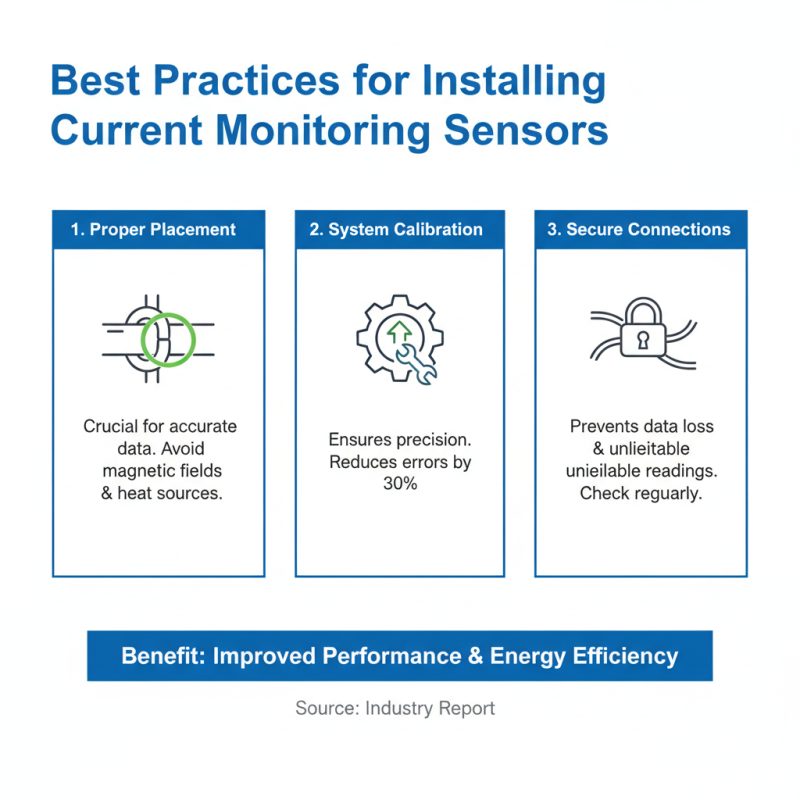
Best Practices for Installing Current Monitoring Sensors
Installing current monitoring sensors effectively is crucial for accurate data collection and system performance. According to a recent industry report, proper installation reduces errors by up to 30%. Misplaced sensors not only affect readings but can lead to inefficient energy use.
Consider the location of your sensors carefully. They should be placed within proximity to the load while avoiding electrical interference. This enhances the reliability of your monitoring system. For optimal accuracy, use calibration guidelines provided by industry standards. Minor discrepancies can skew data, leading to incorrect analysis.
Another important tip is to ensure secure mounting. If sensors are loose, they may shift and produce unreliable data over time. Regular maintenance checks are also essential. Experts suggest reviewing sensor performance every six months. This may seem excessive, but it often uncovers hidden issues before they escalate. Keep in mind that environment factors like temperature and humidity can impact sensor efficiency.
Techniques for Calibrating and Maintaining Current Monitoring Sensors
Calibrating current monitoring sensors is crucial for accurate readings. The process involves adjusting the sensor to align with a known standard. It's important to check calibration regularly. Sensors can drift over time, leading to inaccurate data. Even a slight deviation can cause significant issues, especially in critical systems.
Maintenance is also essential for reliability. Regularly inspect the sensors for any physical damage. Dust, moisture, or corrosion can affect performance. Ensure connections are secure; loose wires can lead to erratic behavior. Cleaning the sensors can improve accuracy. Use appropriate tools and avoid harsh chemicals that could cause harm.
Do not forget about software updates. Many sensors rely on firmware for optimal functionality. Outdated software can introduce errors. Check for updates periodically. Documentation is key; keep track of calibration dates and maintenance activities. This log will help identify patterns or recurring issues, providing insight into potential improvements. Reflecting on these practices can lead to better sensor performance and longevity.
Analyzing Data from Current Monitoring Sensors for Improved Performance
Monitoring current usage is crucial for optimal performance in various applications. Effective data analysis from current monitoring sensors can significantly enhance operational efficiency. According to a recent report from the International Energy Agency, implementing precise monitoring tools can reduce energy costs by up to 30%. This statistic showcases the potential gains when organizations embrace these technologies.
When analyzing data, consider the accuracy of the sensors. Even a minor calibration error can lead to misleading insights. Big data analytics can identify patterns in energy consumption. Yet, data quality remains a common challenge. A report from McKinsey emphasizes that data inaccuracies can cost companies over $3 million annually. This stark truth urges organizations to prioritize data validation processes.
Moreover, real-time monitoring allows for immediate feedback. Companies can adjust operations swiftly, mainly in industries with fluctuating demands. However, some organizations still rely on outdated practices. This reliance can hinder progress and innovation. Organizations must regularly update their sensor technology and data analysis methods to stay competitive. Embracing continuous improvement is vital in this rapidly evolving landscape.
 X
X