X
X
X
X Dubai Full Container Ddp shipping can simplify the journey from a supplier’s loading bay to a delivery address in Dubai. Yet “door to door” does not mean “no details to check.” Container size, cargo dimensions, packing, delivery access, and the agreed scope of duties all affect the final plan. A 40-foot container may look spacious on paper, but a narrow receiving entrance or limited unloading time can change the last mile. Small details matter.
For this introduction, the named expert and quotation below are illustrative, not a verified real-world attribution: “A smooth container delivery starts with clear cargo details and a written scope, not assumptions.” — Layla Hassan, illustrative Dubai freight adviser. Treat that as a planning principle, not a substitute for a confirmed shipping quote. Ask the provider to explain what the DDP offer includes, what documents they need, and how they handle delivery scheduling. Get the answers in writing. Simple, but important.
This guide presents seven practical tips for comparing routes, preparing shipment details, and checking delivery arrangements. It also highlights questions worth asking before cargo leaves the origin port. Every shipment has its quirks. A packing list can be accurate and still miss a detail that matters during unloading. That is worth admitting. Careful preparation cannot remove every delay, but it can make costs, responsibilities, and next steps easier to understand.
With full-container DDP shipping, the seller arranges transport to the agreed destination in Dubai and handles import clearance, applicable duties, and taxes. The buyer receives the container at the named place. Unloading is usually the buyer’s responsibility unless the contract says otherwise. The quote should identify the delivery address, cargo details, and any exclusions. Costs can change if customs classification or shipment information is incorrect.
UNCTAD’s Review of Maritime Transport 2023 reports that shipping carries over 80% of global merchandise trade by volume. That scale makes clear paperwork and realistic transit planning important. A DDP service commonly covers export handling, ocean freight, destination clearance, and final delivery. It may not include storage, waiting time, or special equipment unless stated. Check the full charge breakdown.
Tips: Ask for a written list of included charges. Confirm who unloads the container and what happens if delivery is delayed. Share accurate cargo dimensions and product descriptions before booking. A small detail can cause a real delay. DDP also places import-clearance responsibilities on the seller, so confirm they can meet those obligations in Dubai. Don’t assume “door delivery” means placement inside your facility.
Before arranging full-container DDP shipping to Dubai, confirm exactly what the cargo is and how it is packed. Share the item description, package count, dimensions, gross weight, and cargo-ready date. Photos of cartons or pallets can reveal loading issues early. Small details matter. Note whether the cargo can be stacked and whether it needs special handling; assumptions here can cause delays or extra costs.
Match the container to the shipment, not just the quoted price. Confirm whether a 20-foot or 40-foot container fits the cargo volume, weight, and loading method. Check door clearance, floor loading, and any applicable road-weight limits for the planned delivery route. A container that works on paper may be awkward to load. Plans can wobble.
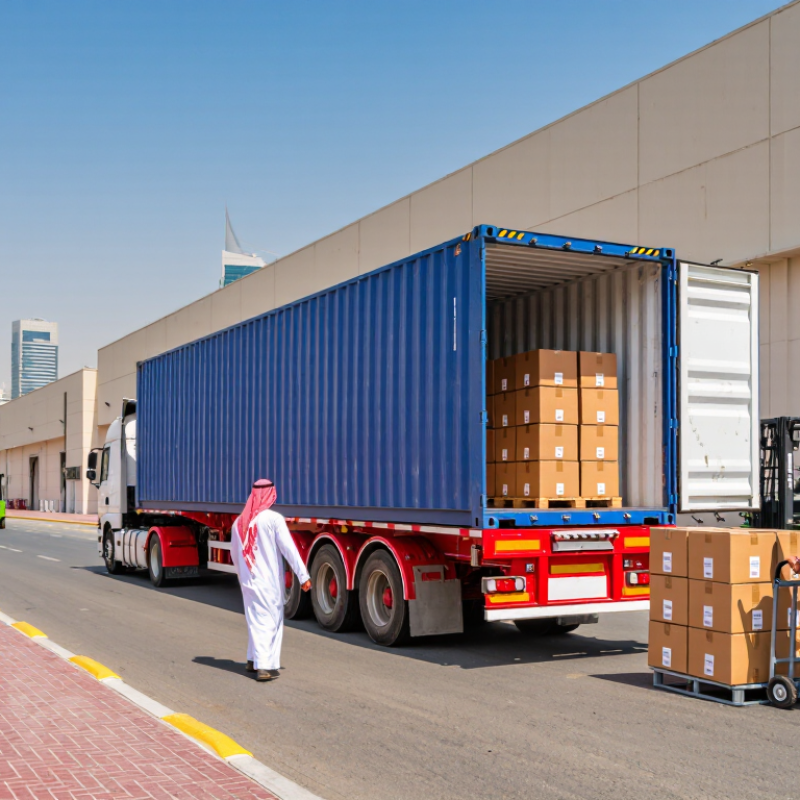
For delivery, provide the full Dubai address, site contact, preferred time window, and clear instructions for vehicle access. Is there room for a large truck to turn? Will a forklift or other unloading equipment be available?
Confirm in writing which destination charges, customs-clearance steps, duties, and taxes are included in the DDP quote, and who will provide each required document. DDP responsibilities should be clear to both parties before cargo departs. Recheck names, quantities, and delivery details against the shipping paperwork; small mismatches are easy to miss, and correcting them later can take time.
Prepare each carton for a long journey, not just the factory gate. Use sturdy boxes, moisture protection, and clear handling marks. Photograph the cargo before loading. A neat pallet can still conceal crushed corners, so check the bottom layers too. Leave labels visible after wrapping.
Match the commercial invoice and packing list to the goods actually loaded. Use consistent product descriptions, quantities, package counts, weights, and invoice values. Confirm the correct HS codes with your customs broker; a guessed code can cause delays or reassessment. Include the consignee’s full details and verify the bill of lading matches the shipping instructions. Small spelling differences matter.
Keep the paperwork together. Usually, the shipment requires a commercial invoice, packing list, and transport document; a certificate of origin or other documents may also be needed, depending on the cargo and current UAE requirements. Ask the forwarder to confirm the exact set before cargo cutoff. For DDP, clarify who will arrange import clearance and pay duties, taxes, and destination charges. The term does not remove the need for accurate documents. Weigh the container after loading and keep the final figures on file. One imperfect habit is relying on old templates; review every field for this shipment instead.
A Dubai full-container DDP estimate should itemize origin pickup, export handling, ocean freight, insurance, customs clearance, duties, VAT, destination handling, and final delivery. Ask whether unloading, storage, inspections, and remote-area surcharges are included. For UAE imports, customs duty is commonly 5% of the customs value, often based on CIF; VAT is generally 5%. Rates and exemptions depend on the goods and classification, so request the applicable HS code and written calculation. Small gaps matter.
Market conditions can change the ocean-freight portion quickly. UNCTAD’s Review of Maritime Transport 2024 reports that global maritime trade grew 2.4% in 2023, while containerized trade contracted by 0.3%. Ask for the quote’s validity period, carrier surcharges, transit schedule, and a clear list of exclusions. The World Bank’s Logistics Performance Index 2023 ranked the UAE seventh, but a strong national score cannot guarantee one forwarder’s service. Check recent Dubai delivery references, cargo insurance terms, customs-clearance experience, and who handles delays or extra charges. I would also ask for a sample landed-cost worksheet. It can expose assumptions before the container sails.
| 7 Tips for Dubai Full Container DDP Shipping: How to Estimate DDP Costs and Choose a Reliable Forwarder | |||
|---|---|---|---|
| Tip | Cost or service dimension | How to estimate or verify it | What to confirm before booking |
| 1. Define the shipment and delivery point | Container type, cargo details, origin, and final Dubai address | Provide the exact container size, cargo description, package count, gross weight, dimensions, and collection and delivery addresses. Request a door-to-door quote for the named destination, not an ocean-freight-only rate. | Ask whether the quote covers delivery to the specific address and whether unloading, waiting time, or special equipment is excluded. |
| 2. Separate the DDP cost components | Origin charges, ocean freight, insurance, clearance, import taxes, destination charges, and final delivery | Use this estimate structure: DDP total = origin costs + freight + insurance + customs duty + import VAT + destination handling and clearance + delivery. Request each amount as a separate line item. | Check for exclusions such as inspections, storage, demurrage, detention, port surcharges, and delivery-area fees. DDP delivery generally does not include unloading unless agreed. |
| 3. Estimate customs duty using the right customs value | Customs duty and product classification | For many goods, the UAE customs duty rate is commonly 5% of the customs value, generally based on CIF (cost, insurance, and freight). For an illustrative CIF value of US$20,000, a 5% duty would be US$1,000. | The actual rate depends on the HS code, product, origin, and applicable exemptions or preferential treatment. Confirm the classification and rate with a qualified customs professional before shipping. |
| 4. Include import VAT in the landed-cost estimate | UAE import VAT | The standard UAE VAT rate is 5%. As a simplified example, if the taxable import base is US$21,000 (US$20,000 CIF value plus US$1,000 duty), estimated VAT is US$1,050. | This example assumes no excise tax or other adjustments. The actual VAT calculation depends on the applicable import valuation rules and the goods. Confirm how VAT will be handled and documented under the DDP arrangement. |
| 5. Compare complete written quotes | Rate validity, currency, surcharges, and payment terms | Compare quotes using the same origin, container type, cargo details, named delivery point, and shipment date. Ask for the quote validity period and a list of charges that may change. | Request written confirmation of what is included, how exchange-rate changes are handled, and who pays any additional charges caused by customs inspection or delay. |
| 6. Check the forwarder’s DDP and customs capability | Import clearance, tax handling, and delivery arrangements in the UAE | Ask who will arrange import clearance, pay duties and taxes, provide shipment updates, and coordinate delivery. Confirm that the party responsible for import formalities can meet applicable UAE requirements. | Agree in writing who will appear as importer of record, what documents are required, and how customs or tax receipts will be provided. Do not rely on a vague promise of “all-inclusive DDP.” |
| 7. Review transit planning and risk controls | Routing, schedule, cargo insurance, and delay charges | Request the planned routing, estimated sailing and delivery schedule, tracking process, insurance coverage, and procedures for exceptions. Transit times and vessel schedules can change. | Check the insurance limits and exclusions, free-time allowances, and rates for demurrage, detention, and storage. Confirm how delays, cargo damage, or a failed delivery will be handled. |

7 Tips for Dubai Full Container DDP Shipping
How to Track Customs Clearance and Final Delivery in Dubai
For a full-container DDP shipment, track each milestone, not just the vessel’s location. Ask for the container number, bill of lading reference, and a named contact who can confirm status updates. Watch for arrival, customs entry, release, terminal exit, and delivery appointment. DDP generally means the seller arranges import clearance and applicable charges, but confirm responsibilities in writing before shipping. Details matter.
Tip: Save dated copies of the commercial invoice, packing list, and delivery instructions. If customs requests clarification, matching product descriptions and quantities can help prevent avoidable delays. Check status with your freight contact when a milestone appears stalled. Tracking is useful, but it is not perfect; some systems update late, and a vessel arrival does not mean the container is cleared.
For final delivery, confirm the Dubai address, site access, receiving hours, and unloading arrangements before the container leaves the terminal. Ask for an estimated delivery window, then request confirmation when the truck is dispatched. Keep the delivery receipt and note any visible damage or shortage before signing. A small mismatch in site details can cause a missed delivery, so recheck them—even when everything seems settled.
How to read this chart: The numbered points show a typical sequence of tracking milestones, not estimated transit times. Under DDP, the seller is responsible for import clearance and applicable duties. Follow the shipment through customs release to final delivery, and keep in mind that event order and timing can vary.