X
X
X
X Choosing the right Electric Scooter Manufacturer requires more than comparing prices or viewing attractive product photos. A reliable partner should demonstrate practical engineering experience, stable production, and clear quality controls. Look for factory testing records, battery safety procedures, motor performance data, and realistic delivery timelines. Ask how often the manufacturer inspects welds, brakes, tires, controllers, and charging systems. Small details matter. A loose connector can become a costly warranty problem.
Horace Dediu, a respected micromobility analyst, often uses the phrase, “Hardware is hard.” That brief warning fits electric scooter sourcing perfectly. A manufacturer may present impressive prototypes, yet production consistency can tell a different story. Request a sample unit and examine its frame alignment, folding mechanism, cable routing, display brightness, and braking response. Speak with existing customers when possible. Their experience may reveal delays that brochures never mention.
No checklist is perfect. I have seen buyers focus heavily on unit cost and overlook packaging damage, replacement parts, or communication speed. That approach can create avoidable pressure later. The best Electric Scooter Manufacturer should welcome technical questions, explain limitations, and provide evidence instead of vague promises. Certifications, factory audits, and documented testing improve confidence, but they do not replace careful verification. A trustworthy relationship develops through repeated proof. Sometimes, the most convincing answer is a manufacturer admitting what still needs improvement. That honesty deserves attention.
Before choosing an electric scooter manufacturer, define who will ride, where, and why.
The 2024 International Energy Agency Global EV Outlook reported that electric two- and three-wheelers exceeded half of sales in China in 2023. That growth does not make every scooter suitable for every market.
Map daily conditions in detail.
A delivery rider may need a removable battery, reinforced suspension, and easy tire servicing. A commuter may value low weight, weather protection, and secure charging.
Record rider weight, hill grades, road surfaces, average trip length, and seasonal temperatures.
A claimed 40-kilometer range can disappoint on steep roads or in cold weather. Test real routes, not only laboratory figures.
Target customers also shape the manufacturer shortlist.
For shared fleets, examine battery cycles, diagnostic access, spare-part availability, and downtime support.
For private users, check folding strength, braking performance, lighting, and clear warranty terms.
The World Health Organization’s Global Status Report on Road Safety 2023 emphasizes safer transport systems, so safety testing should outweigh attractive specifications.
Do not accept vague certification claims. Request test records and production quality procedures.
No requirement sheet is perfect. Revise it after pilot rides, because early assumptions often fail outside the showroom.
Manufacturer expertise appears in practical details, not polished factory photos. Ask how long the team has designed electric scooters for different riding conditions. Experienced engineers should explain motor selection, battery management, braking systems, and frame stress testing clearly. Their answers should include test methods, not vague promises. During a factory visit, inspect weld consistency, cable protection, battery storage, and assembly instructions. Small details often reveal large process problems.
Product quality requires measurable evidence. Request sample units from different production batches, then compare acceleration, braking distance, folding strength, and charging performance. Check whether batteries receive capacity testing and whether finished scooters undergo road simulation. A reliable manufacturer should provide inspection records, failure data, and traceability for key components. Ask about water-resistance testing, but do not treat one successful test as permanent proof. Real use is messier. Dust, rough pavement, and repeated folding expose weaknesses quickly.
Production capacity must match your forecast, not just the supplier’s maximum claim. Review monthly output, available assembly lines, staffing levels, and component inventory. A pilot order can reveal whether quality survives higher volume. Confirm lead times for prototypes, mass production, spare parts, and replacement components. Also examine how the factory handles defects and delayed materials. An impressive capacity figure means little without stable quality control. I would rather choose a slower producer with transparent records than a fast one avoiding difficult questions. That preference may cost time, but rushed scaling can create expensive failures.
How to Choose the Best Electric Scooter Manufacturer
Verify Safety Standards, Certifications, and Quality Control Systems
Choosing an electric scooter manufacturer requires more than comparing prices and product photos. Safety begins with documented testing. Ask whether the scooter has passed battery, braking, charging, lighting, and structural tests. Request reports from recognized independent laboratories, not only internal inspection sheets.
Check each certificate carefully. Its scope should match the exact model, battery system, and sales market. Certification numbers, issuing laboratories, test dates, and renewal status should be easy to verify. A certificate can look impressive. It may still cover only one component. Ask difficult questions. Reliable manufacturers usually answer with records, not vague promises.
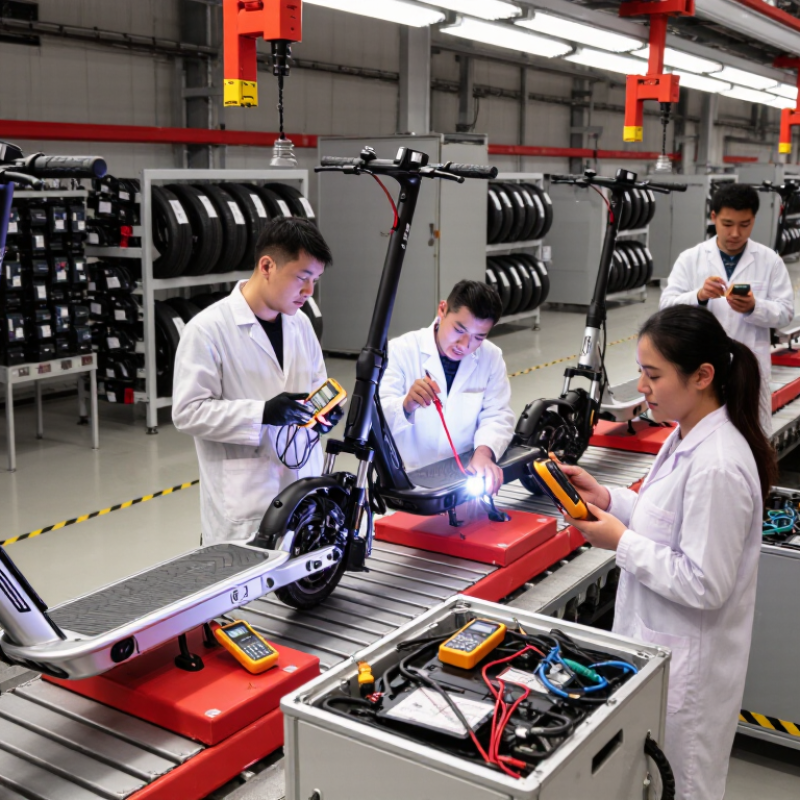
Quality control should be visible on the factory floor. Look for incoming battery checks, torque-controlled assembly tools, weld inspections, and end-of-line road testing. Ask how workers record defects and separate rejected parts. Traceability matters. Each battery and controller should connect to a production batch. This supports faster investigation when problems appear.
I have learned that polished documentation does not always reflect daily practice. A factory may pass an audit, then weaken checks during busy seasons. For this reason, review recent inspection data and request a live production walkthrough. Examine cable routing, connector seals, tire alignment, and brake response on sample units. One missing record is not proof of failure, but it deserves a clear explanation. Choose a manufacturer willing to show weaknesses and correct them.
Choosing the best electric scooter manufacturer requires more than comparing online prices. I examine customization options before discussing volume. Can the manufacturer adjust frame geometry, battery capacity, braking systems, display settings, or packaging? Request a working sample, not only digital drawings. Check weld quality, cable routing, tire clearance, and charging performance. Small details often reveal larger production risks. I once accepted attractive specifications too quickly. That decision created costly revisions later.
Pricing should include tooling, sample fees, packaging, shipping, testing, warranty support, and spare parts. Ask for a detailed quotation with each cost listed separately. Compare the total landed cost, not just the unit price. Minimum order quantities also deserve careful attention. A low MOQ may carry a higher unit price, while a large MOQ can trap cash in slow-moving inventory. Negotiate a pilot order when possible. It reduces risk. Still, some manufacturers may refuse it.
Lead times need written milestones. Confirm sample completion, material purchasing, assembly, inspection, and dispatch dates. Ask how delays are reported and documented. A reliable supplier should provide inspection records and clear quality criteria. Factory visits, video audits, and recent customer references add useful evidence. Do not rely on polished photos alone. Production reality can be less impressive. Leave extra time for revisions, customs clearance, and unexpected component shortages. A flexible schedule is safer than a perfect promise.
| Manufacturer Profile | Typical Customization Options | Indicative Unit Price (EXW, USD) | Typical Minimum Order | Sample Development | Mass-Production Lead Time | Tooling or Setup Cost | Common Compliance Support | Best Suited For |
|---|---|---|---|---|---|---|---|---|
| Standard OEM Assembly Supplier | Logo printing, packaging, color selection, software parameter changes, and minor accessory changes. | $220–$380 | 50–100 units | 7–15 days | 25–40 days after sample approval | Usually none for standard parts; approximately $50–$300 for artwork or packaging setup. | Basic technical files and support for common market requirements; final certification is normally buyer-specific. | New distributors, pilot launches, and small online retail programs. |
| Mid-Level OEM/ODM Supplier | Frame color, deck design, lighting configuration, display, battery capacity, controller settings, branding, and packaging. | $350–$650 | 100–300 units | 15–30 days | 35–55 days after design and sample approval | Approximately $300–$2,000, depending on new components and packaging requirements. | Battery and charger documentation, test reports, user manuals, and support for regional certification testing. | Growing brands that need visible product differentiation without a completely new platform. |
| Performance Scooter Specialist | Dual-motor configuration, suspension tuning, braking system, high-capacity battery, reinforced frame, tires, display, and firmware settings. | $650–$1,200 | 100–500 units | 20–40 days | 45–70 days after engineering validation | Approximately $1,000–$8,000 for engineering changes, fixtures, or component validation. | Electrical safety documentation, battery test records, charger specifications, and engineering test reports. | Specialty retailers, rental operators, and customers requiring higher speed, range, or load capacity. |
| Urban Commuter Platform Supplier | Folding mechanism, removable battery, integrated lighting, turn signals, anti-theft functions, app connectivity, and fleet settings. | $400–$800 | 200–500 units | 20–35 days | 40–65 days after final specifications | Approximately $1,000–$6,000 for tooling, firmware integration, or app adjustments. | Documentation for battery, charger, electromagnetic compatibility, lighting, and product labeling requirements. | Commuter-focused products, mobility programs, and fleet management applications. |
| Fleet and Rental-Focused Supplier | Reinforced chassis, swappable batteries, GPS or IoT modules, remote diagnostics, fleet software integration, and heavy-duty tires. | $550–$1,000 | 300–1,000 units | 30–50 days | 55–90 days after field testing and software approval | Approximately $3,000–$20,000 for IoT integration, fleet software, tooling, and durability testing. | Fleet safety documentation, battery records, ingress-protection test data, and durability test reports. | Shared mobility operators, campuses, resorts, and large commercial fleets. |
| Fully Custom Engineering Partner | New frame architecture, proprietary battery layout, custom motor system, unique folding structure, dedicated electronics, app, and complete visual identity. | $900–$2,000+ | 500–2,000+ units | 60–120 days | 90–180 days after design freeze and tooling completion | Approximately $15,000–$100,000+, depending on molds, electronics, software, and testing scope. | Engineering documentation and coordination with independent laboratories; certification responsibility should be defined contractually. | Established brands with significant volume, long-term product roadmaps, and dedicated development budgets. |

Supplier reputation should be checked through evidence, not polished promises. Ask for recent customer references, inspection records, and delivery history. I have found that repeated complaints about missing parts often reveal weak production control. Review how the manufacturer handles defects, delays, and design changes. One impressive factory visit is not enough. Reputation must remain consistent over time.
Communication also shows operational maturity. Send practical questions about battery testing, component traceability, and repair procedures. Measure response speed and clarity. Vague answers can become expensive later. I once trusted a supplier that replied quickly but avoided technical details. That was a mistake. Good partners provide drawings, test reports, and clear contacts for urgent issues.
Request the warranty in writing. Check its duration, covered components, exclusions, and claim process. Ask who pays shipping and how replacement parts are supplied. A useful warranty should explain repair timelines, not only promise “full support.” Test the after-sales system before signing. Send a sample fault report and see whether the reply includes diagnosis, photos, and next steps. Ask about spare-parts availability for at least two years. Small details matter. Still, no evaluation is perfect; unexpected failures can expose weaknesses that documents hide.