How to Choose a Steel Pipe Making Machine in 2026?
Choosing a Steel Pipe Making Machine in 2026 means matching production goals with the realities of your factory floor. A machine that looks impressive in a brochure may not suit your pipe sizes, material grades, or expected output. Start with the basics: required diameter range, wall thickness, steel type, production speed, and available floor space. These details shape the equipment configuration and help prevent costly mismatches.
Look beyond the headline speed. Ask how quickly the line can change sizes, what tooling each product requires, and how operators access weld controls and maintenance points. Check whether the supplier can explain forming, welding, sizing, cutting, and inspection stages in practical terms. Request references, technical specifications, and a clear breakdown of included equipment. That matters. Also consider power use, spare-part availability, training, and service response times; a fast line is less valuable when routine support is difficult to obtain.
Your decision should rest on verifiable requirements, not a sales promise alone. Compare machines using the same product samples and acceptance criteria, then confirm performance expectations in writing. If possible, review a factory test or speak with operators using similar equipment. Small details count. Even a careful comparison cannot remove every uncertainty, and specifications may look better on paper than they feel during a busy shift. This guide outlines the questions to ask, the trade-offs to weigh, and the evidence to check before choosing a machine for your 2026 production plans.
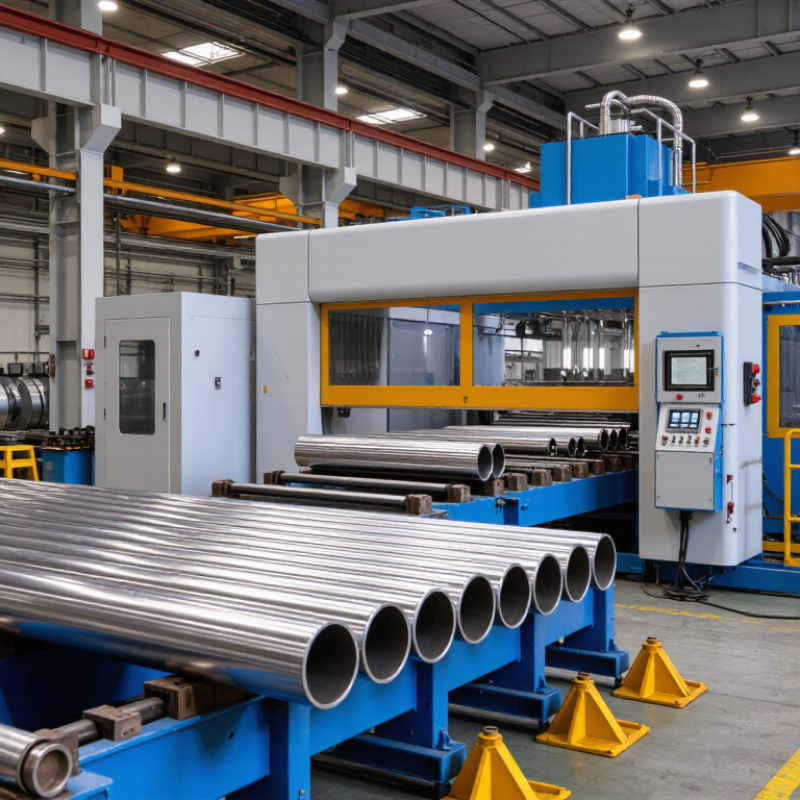
Define Your Pipe Products, Materials, and Production Requirements
Before comparing steel pipe making machines, write down exactly what the line must produce. Specify round, square, or rectangular pipe, along with outside diameter, wall thickness, cut length, and acceptable dimensional variation. “Standard size” is not enough. A shift from thin-wall furniture tube to heavier structural pipe can change forming loads, tooling needs, and welding requirements.
Name the material, too: carbon steel, stainless steel, or another grade, plus its thickness range and coil width. Material properties affect how reliably the strip forms and how the seam behaves. Then estimate actual output, not just a headline speed. Include working hours, product changes, scrap, and time for setup. Small details matter.
A useful machine specification connects these requirements to forming stands, welding capacity, sizing equipment, and cutting systems. Ask how long a typical size change takes, and what tooling must be replaced. Check whether the proposed range covers your most common products without forcing frequent adjustments. Leave room for future sizes, but avoid paying for capacity you may never use. This part is easy to misjudge. Review sample production plans with operators and maintenance staff; they may spot a bottleneck that a spreadsheet misses.
Choose the Forming and Welding Process for Your Steel Pipe
How to Choose a Steel Pipe Making Machine in 2026?
The right forming and welding process depends on the pipe’s dimensions, steel grade, production volume, and required tolerances. For many straight-seam pipes, roll forming followed by high-frequency resistance welding offers continuous production and consistent output. The strip edges are shaped, brought together, and welded before sizing rolls refine the pipe’s roundness. Small setup errors can show up as uneven seams or diameter variation. Details matter.
Spiral forming may suit larger-diameter pipes when coil width and floor space influence the plant layout. Longitudinal submerged arc welding is another option for heavy-wall pipe, though it generally involves different equipment and slower production steps. Neither route is automatically better. A common planning mistake is choosing by advertised line speed alone; actual output also depends on changeover time, material handling, and inspection.
Before selecting a machine, match the process to your pipe range and weld requirements. Ask for production data using comparable material thicknesses, not just ideal conditions. Check how quickly operators can change sizes, adjust rolls, and access the weld area for inspection. A trial run with representative steel can reveal practical issues that a specification sheet may miss. The best choice is the process your team can run reliably, day after day.
How to Choose a Steel Pipe Making Machine in 2026? - Choose the Forming and Welding Process for Your Steel Pipe
| Process | Forming and Joining Method | Typical Product Range* | Best Suited For | Key Selection Considerations |
| ERW / HFW | Strip or coil is progressively roll-formed into a tube. High-frequency current heats the edges, which are forged together without filler metal. | Common line configurations cover roughly 10–610 mm outside diameter and about 0.5–25 mm wall thickness, depending on the mill design. | High-volume production of pipe and tube for construction, furniture, automotive components, and selected pressure applications. | Check the required diameter and wall-thickness range, steel grade, changeover time, weld-seam inspection, and whether the line includes sizing and finishing equipment. |
| LSAW | A plate is formed into a cylinder, commonly by JCOE or UOE forming, then joined with a longitudinal submerged-arc weld (SAW). | Large-diameter lines commonly produce approximately 406–1,620 mm outside diameter with wall thicknesses around 6–60 mm; actual limits depend on the press and line layout. | Thick-wall, large-diameter pipe for demanding pipeline, structural, and offshore projects. | Evaluate plate width and thickness, forming method, weld procedure, dimensional tolerances, nondestructive testing, and required pipe-length handling. |
| SSAW / HSAW | Coil is helically formed into a pipe. The spiral seam is welded, typically using submerged-arc welding on the inside and outside. | Many production systems cover roughly 219–3,500 mm outside diameter and about 5–25 mm wall thickness; available ranges vary by equipment and material. | Large-diameter water transmission, piling, and certain pipeline applications where coil-based production is suitable. | Compare coil width and grade, diameter flexibility, spiral-seam requirements, weld inspection, and applicable product standards for the target market. |
| Seamless (piercing and rolling) | A solid billet is heated, pierced to form a hollow shell, and then elongated and sized by rolling. No weld seam is used. | Product ranges depend strongly on the mill route; commercial seamless pipe commonly spans small to large diameters and a wide range of wall thicknesses. | Applications requiring seamless construction, including certain high-pressure, high-temperature, and mechanical-service products. | This is a different production route, not a welded-pipe line. Assess billet supply, furnace and rolling capacity, size range, energy use, and applicable product standards. |
| *Typical ranges are indicative rather than guaranteed machine specifications. Actual capabilities vary by equipment configuration, material grade, product standard, and required tolerances. Confirm the operating range and acceptance requirements with the equipment supplier before selection. |
Match Machine Capacity, Pipe Size, and Automation to Your Needs
Start with the pipe you sell, not the biggest output figure on a brochure. List your common outside diameters, wall thicknesses, steel grades, and monthly order volume. A machine rated for high speed may run slower on thicker walls or during frequent size changes. Check achievable speed using your own material and target dimensions.
Confirm the machine’s size range includes your everyday products, not just occasional special orders. Changing rolls takes time, and tooling costs can add up. Small details matter. Ask how long a typical changeover takes and whether one operator can complete it safely. A trial run with representative coil can reveal issues that a specification sheet will not, such as edge alignment, weld consistency, or pipe straightness.
Match automation to the real bottleneck. Automatic feeding, cut-off, and stacking can reduce handling, while sensors may help flag weld or dimensional variation. More automation is not automatically better; it can add setup needs and maintenance. Compare the expected staffing and output with your current workflow, then check service access and spare-part availability. The numbers may look neat on paper, but production rarely stays perfectly neat. Plan some room for imperfect coils, short runs, and operator learning.
Compare Machine Quality, Safety Features, and Supplier Support
When choosing a steel pipe making machine in 2026, treat quality as measurable, not visual. Inspect weld consistency, roll alignment, frame stiffness, and cut-length repeatability during sample runs at your target diameter and wall thickness. Ask for documented tolerances, changeover times, reject rates, and maintenance intervals. A polished showroom machine proves little. Check physical guards, emergency stops, and interlocks, then review the machine’s risk assessment. ISO 12100 offers a framework for identifying machinery hazards and reducing risk. Small details matter.
Safety deserves careful comparison. The U.S. Bureau of Labor Statistics reported 3.3 recordable injury and illness cases per 100 full-time equivalent workers in manufacturing in 2023. This industry-wide figure does not measure machine-specific risk, but it underscores why safety checks should not be treated as paperwork. For supplier support, request response-time commitments, recommended spare-parts lists, remote troubleshooting details, and technician training plans. Confirm that common wear parts are identified and can be replaced without guesswork. Ask to speak with a current customer about downtime and service follow-through. That check can be awkward, but useful. A fast sales reply is not the same as dependable support after installation. Compare written service terms with the support your production team will actually need.
Evaluate Total Costs and Verify Performance Before Purchase
How to Choose a Steel Pipe Making Machine in 2026?
Evaluate Total Costs and Verify Performance Before Purchase
The purchase price is only one part of a machine’s cost. Include installation, tooling, power use, operator training, maintenance, and expected downtime in your estimate. Ask how often rolls need changing and how long each change takes. Scrap matters, too: a small increase in rejected pipes can become costly over a full production shift. Compare realistic output, not just the maximum speed listed in a brochure. Your estimate may still miss something; production conditions rarely match a perfect spreadsheet.
Before purchase, request a production trial using your intended steel grade, wall thickness, and pipe diameter. Check line speed alongside weld consistency, dimensional accuracy, changeover time, and scrap rate. Ask to inspect sample pipes and review the measurement records. Confirm that the test uses calibrated instruments and agree on clear acceptance criteria in writing. A fast run alone proves little. If possible, have an experienced technician review the results; this adds effort, but may reveal issues a short demonstration overlooks.
Tips: Bring your own material specifications to the trial. Record setup time, actual output, and rejected pieces. Check spare-part lead times and service response before signing.
Steel Pipe Machine Selection: Illustrative 5-Year Total Cost
This planning example compares purchase, installation, tooling, energy, and maintenance costs in USD thousands. Values are illustrative—not market quotes or industry benchmarks—so replace them with supplier quotations and your production assumptions. Before purchase, verify line speed, dimensional tolerance, weld quality, and uptime in a witnessed acceptance test using your materials and specifications.
 X