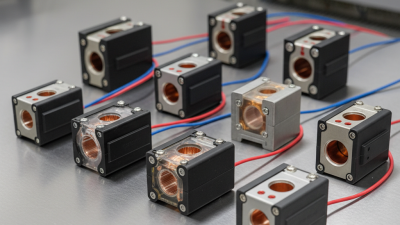
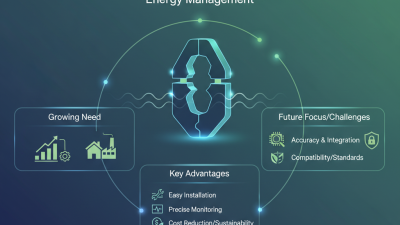
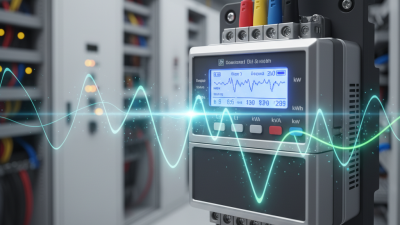
Top 5 Best Split Core Current Transformers for Accurate Measurements?
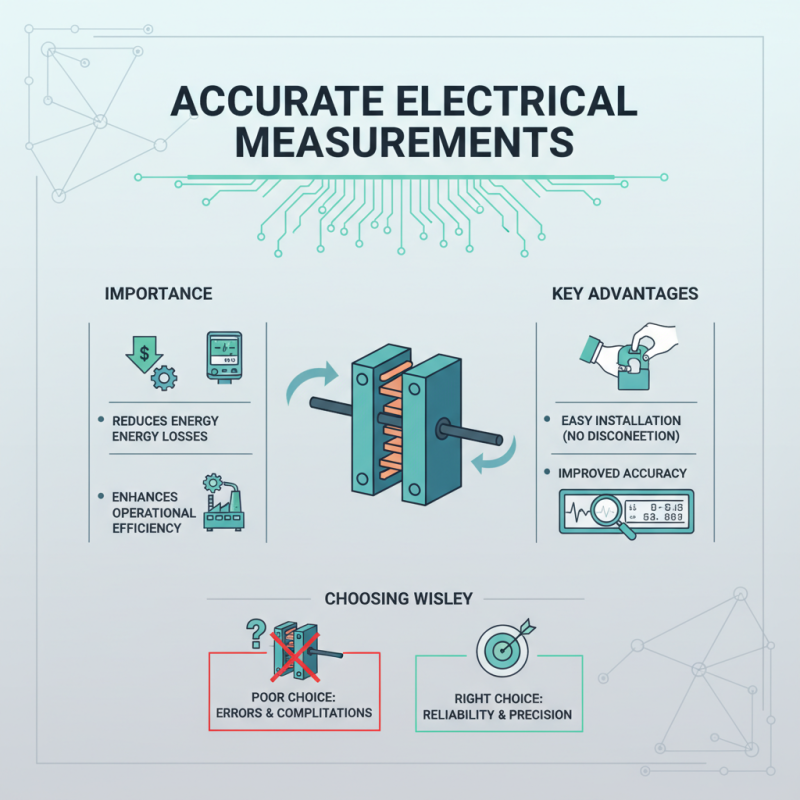
In the realm of electrical engineering, the importance of accurate measurements cannot be overstated. A critical component in achieving this precision is the split core current transformer. According to a recent industry report by the International Electrotechnical Commission, improper measurements can lead to significant energy losses, affecting both performance and costs. These transformers provide the enhanced accuracy needed for advanced monitoring systems.
Expert David Grayson emphasizes, “Using split core current transformers can streamline operational efficiency.” This statement highlights their value in modern applications. These devices offer flexibility as they can be easily installed without disconnecting the circuit. This quality is indispensable in various industrial settings. However, not all split core current transformers are created equal. Some models fall short in accuracy, raising questions about their real-world performance.
The choice of a transformer can make a noticeable difference. Users often overlook this when selecting equipment. The right model can help minimize errors, while a poor choice can introduce unnecessary complications. This awareness is crucial as technology evolves. Individuals should carefully consider their options to ensure reliable electrical measurements.
Overview of Split Core Current Transformers
Split core current transformers have gained popularity in various industries. Their design allows easy installation and removal without interrupting the circuit. This feature is crucial for electric utilities and commercial testing. According to a report by MarketsandMarkets, the current transformer market is expected to grow at a CAGR of 6.2% from 2021 to 2026. This growth reflects the increasing need for accurate measurements in electrical systems.
These transformers excel in providing real-time monitoring. They can measure AC currents efficiently and are utilized in energy management systems. Data from a recent industry survey reveals that around 70% of electrical engineers prefer split core designs for their flexibility. However, concerns about accuracy persist. Some professionals warn that improper installation can lead to measurement inaccuracies.
Despite their advantages, split core current transformers require careful consideration during selection. Users must ensure compatibility with their existing systems. Misalignment or external interference can distort readings. According to IEEE standards, calibration is also essential to maintain accuracy. Regular maintenance checks are recommended to avoid potential pitfalls.
Key Features to Consider in Split Core Current Transformers
When selecting split core current transformers, several key features deserve attention. Accuracy is paramount. Ideally, transformers should provide precise readings even in fluctuating conditions. Some models may struggle with consistency, leading to unreliable data. A transformer with better precision often comes at a higher price, but it’s crucial for serious measurements.
Another essential aspect is the current rating. It should match or exceed the expected load. Transformers with a lower rating might not function well, risking measurement errors. Choose models that offer a wide range of ratings. Flexibility is important for various applications, but this can also complicate the selection process.
Ease of installation is also worth considering. Some designs allow for quick setup, saving time. Ensure the design facilitates smooth operation without complicated processes. However, not all user-friendly transformers perform equally well. Balancing ease of use and accuracy can be a challenge.
Top 5 Best Split Core Current Transformers for Accurate Measurements
Top 5 Models: In-Depth Reviews and Comparisons
When selecting a split core current transformer, accuracy is key. These devices are essential for reliable electrical measurements. According to industry reports, accuracy within 1% is standard for high-quality models. Several factors impact performance, including the design, materials, and even installation methods.
Look for models that offer a wide measurement range. Some can handle currents from a few milliamps to thousands of amps. This versatility is beneficial in various applications, from residential to industrial settings. However, remember that a higher range might affect overall accuracy. Thus, it is crucial to assess your specific needs before making a decision.
**Tips**: Check for any installation guides provided. Improper installation can lead to inaccurate readings. Educate yourself on how each transformer works. Knowledge can guide you in the right direction. Finally, consider user reviews and expert comparisons to evaluate models before buying. Real-world feedback can reveal strengths and weaknesses not found in specifications.
Applications of Split Core Current Transformers in Industry
Split core current transformers (CTs) are essential in various industries for accurate electrical measurements. Their design allows easy installation without disconnecting circuits, a crucial feature for many applications. Industries like manufacturing and power generation benefit significantly from their use. These CTs help monitor energy consumption and detect faults, ensuring safety and efficiency.
In HVAC systems, split core CTs are employed to optimize energy use and maintain system performance. They provide data for energy audits and support sustainability initiatives. However, their accuracy may vary with different load conditions. Users must understand the limitations and calibration needs to ensure precise readings.
In renewable energy, like solar and wind, these transformers play a vital role. They monitor system performance and help in grid integration. This can be challenging, as environmental factors can affect measurements. It's important to regularly review and adjust installation setups to maintain accuracy.
Balancing performance with reliability remains a key aspect of effectively utilizing split core current transformers.
Best Practices for Installation and Use of Split Core Current Transformers
When using split core current transformers (CTs), proper installation is crucial for accurate measurements. These devices can measure AC currents without disconnecting the circuit. However, misalignment or poor mounting can lead to false readings. A report by the Institute of Electrical and Electronics Engineers (IEEE) indicates that incorrect positioning can introduce measurement errors of up to 10%. Installing CTs away from magnetic interference zones is vital to prevent inaccuracies.
Before installation, check the specifications of your CTs. This includes the turn ratio and maximum current ratings. It’s also essential to ensure the CT is securely fastened to prevent movement. Options for mounting include using brackets or adhesive methods. Data from a recent industry survey suggests that nearly 30% of users reported issues due to improper mounting. It’s important to double-check that the core closes completely, as gaps can severely impact performance.
Regular maintenance plays a key role too. Regularly inspect the devices for wear and tear. Dust or moisture can affect their functionality. Keeping records of your measurements can help identify drifting inaccuracies over time. Although many rely on CTs for real-time readings, any flaws in setup can lead to compounded errors. Making adjustments based on careful reflection is essential for achieving reliability with split core current transformers.
 X
X