• Products
  • Solutions
  • Support
  • Contact
  • Order OnlineOrder Online

10 Best Electrical Metering Devices for Global Buyers

Choosing the right electrical metering devices is a practical decision for global buyers. It affects safety, billing accuracy, energy management, and long-term operating costs. A meter may look compact, yet its internal sensors, communication system, and calibration quality can determine project success.

William Thomson, Lord Kelvin, a pioneer of electrical measurement, is widely credited with saying, “To measure is to know.” That principle still matters in modern facilities. Energy managers need dependable readings from factories, offices, solar installations, and commercial buildings. A device should match the application, voltage range, current load, installation method, and required communication protocol. It should also support recognized testing and certification practices in the target market.

Real projects are rarely perfect. A low-cost meter can become expensive when readings drift or software integration fails. A highly advanced model may also be unnecessary for a small workshop. This guide examines ten leading electrical metering devices for global buyers, comparing accuracy, functions, connectivity, durability, and practical installation needs. The list considers power meters, energy analyzers, smart meters, clamp meters, and specialized monitoring equipment.

Look beyond the display.

Buyers should verify technical documents, calibration evidence, warranty terms, supplier experience, and after-sales support. Regional grid conditions can differ considerably. So can procurement expectations. No single device fits every site. That is an important limitation. Careful evaluation remains essential, especially when measurement data supports maintenance decisions, energy-saving projects, or financial reporting.

10 Best Electrical Metering Devices for Global Buyers

Electrical Metering Devices: Purpose, Functions, and Measurement Principles

10 Best Electrical Metering Devices for Global Buyers

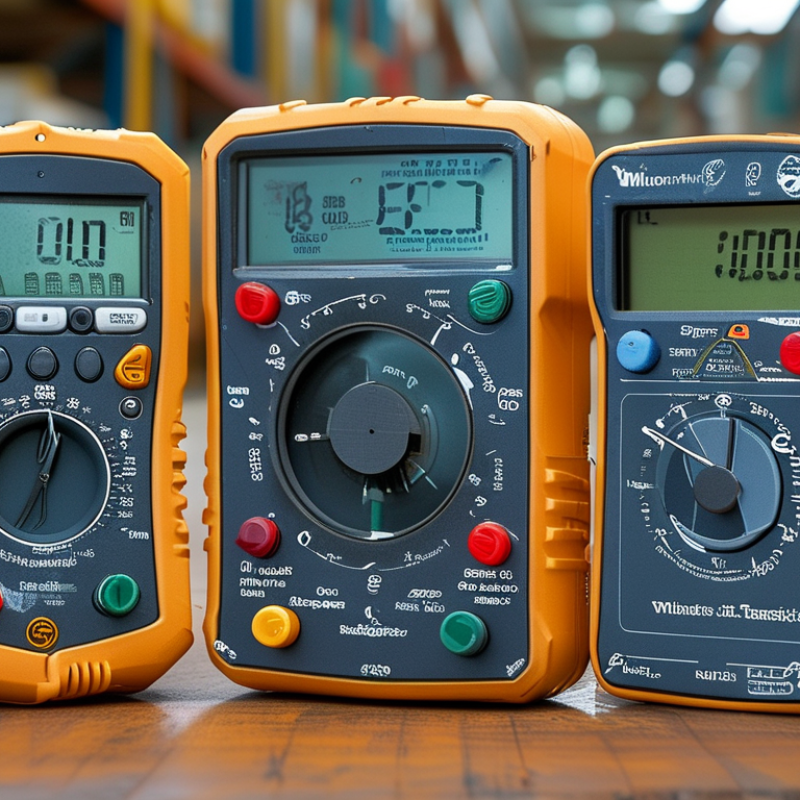
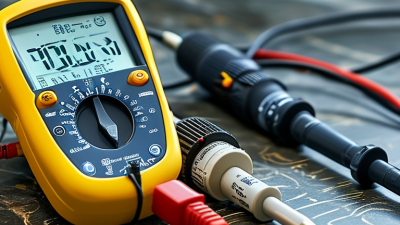
Electrical metering devices convert electrical behavior into readable evidence. A multimeter checks voltage, resistance, and continuity. Clamp meters measure current without disconnecting conductors. Energy meters record consumption over time, usually in kilowatt-hours. Power quality analyzers reveal harmonics, voltage dips, imbalance, and transient events. Each device answers a different operational question.

The need is expanding. The International Energy Agency’s Electricity 2024 report forecasts global electricity demand will grow by about 4% annually through 2026. Accurate metering supports safer distribution, equipment maintenance, and more accountable energy management. Measurement principles matter. Voltage is measured across a circuit, while current is measured through it or around it. Shunt-based meters use a known resistance. Current transformers use magnetic induction. Digital meters then convert these signals through sampling and calculation.

Accuracy is not only a display specification. Technicians should check measurement category ratings, stated uncertainty, calibration intervals, and environmental limits. IEC 61557 provides requirements for electrical safety testing equipment, while IEC 62052 and IEC 62053 address electricity-meter performance. Field conditions can be less tidy. Cable temperature, electromagnetic interference, poor probe contact, and phase-angle errors may distort results. A meter can look precise while measuring the wrong point. That mistake is easy to overlook.

For global buyers, supply voltage, frequency, socket standards, language settings, and calibration documentation deserve equal attention. No instrument is perfect. Independent verification remains wise.

Key Criteria for Comparing Meters in Global Markets

10 Best Electrical Metering Devices for Global Buyers

Key Criteria for Comparing Meters in Global Markets

Global buyers should compare electrical meters beyond display size and purchase price. The International Energy Agency’s Electricity 2024 report forecasts average global electricity demand growth of 3.4% from 2024 to 2026. This growth increases the need for stable, traceable measurement across factories, buildings, and renewable installations.

Accuracy class is a practical starting point. Check whether the meter follows relevant IEC 62052 and IEC 62053 requirements. Confirm voltage range, frequency compatibility, overload capacity, and measurement performance at low loads. Safety ratings also matter. IEC 61010 guidance supports safer designs for measurement circuits, while IEC 60529 defines protection against dust and water. A meter rated for indoor use may fail quickly in a humid plant room. I have seen buyers focus on accuracy but overlook temperature drift and calibration intervals.

Tips: Request calibration records linked to recognized standards. Verify local certification before shipment. Test communication protocols with your existing system. Compare total ownership cost, including sensors, software, maintenance, and training. A cheaper meter can become expensive after one replacement cycle. This is easy to underestimate. For connected meters, review cybersecurity controls and data ownership terms. The International Energy Agency also emphasizes digitalization as an important part of modern power-system management. Still, connectivity should not replace basic measurement discipline. A reliable meter needs clear documentation, suitable installation, and a realistic performance test.

10 Best Electrical Metering Devices for Global Buyers - Key Criteria for Comparing Meters in Global Markets

No. Metering Device Primary Measurement Typical Measurement Capability Typical Basic Accuracy Safety Category Relevant Standards Best-Fit Applications Global-Buying Criteria
1 True-RMS Digital Multimeter AC/DC voltage, AC/DC current, resistance, continuity and frequency Voltage up to 600–1,000 V; current up to 10 A direct, with higher current possible through accessories Approximately ±0.5% to ±1.0% of reading for DC voltage CAT III 600 V or CAT IV 600 V on suitable models IEC 61010-1; EMC requirements under IEC 61326-1 General electrical maintenance, control panels, power supplies and field troubleshooting Verify true-RMS performance, input protection, fuse rating, voltage rating, plug configuration and calibration documentation
2 AC/DC Clamp Meter Current without disconnecting the conductor; many models also measure voltage and resistance AC current commonly 400–1,000 A; DC current commonly 400–1,000 A; jaw openings typically 30–55 mm Approximately ±1.5% to ±3.0% of reading for current CAT III 600/1,000 V; CAT IV 600 V on higher-rated models IEC 61010-1; IEC 61010-2-032 for current sensors Motor circuits, distribution boards, HVAC systems and industrial load checks Check jaw size, low-current resolution, inrush mode, DC-zero function, flexible probe compatibility and safety rating
3 Insulation Resistance Tester Insulation resistance and test voltage Test voltages commonly 50, 100, 250, 500 and 1,000 V DC; resistance up to 1–20 GΩ depending on model Typically ±2% to ±5% of reading CAT III 600 V or CAT IV 600 V for installation testing IEC 61557-2; IEC 61010-1 Cable commissioning, motor windings, switchgear and preventive maintenance Confirm selectable test voltages, automatic discharge, guarded measurement, timed tests, rechargeable-battery rules and calibration interval
4 Earth Ground Resistance Tester Protective-earth and grounding-system resistance Two-, three- and four-pole testing; typical ranges from 0.01 Ω to 2–20 kΩ Approximately ±1.5% to ±3.0% of reading Measurement category depends on model and test environment; often CAT III 300/600 V IEC 61557-5; IEC 61010-1 Building grounding, substations, lightning protection and electrical installation acceptance Compare test methods, lead length, soil-resistivity function, noise rejection, clamp capability and local installation requirements
5 Power Quality Analyzer Voltage, current, power, energy, harmonics, transients and power factor Single- and three-phase systems; harmonic analysis commonly through the 40th or 50th harmonic Voltage/current channels commonly ±0.1% to ±0.5% of reading, depending on sensor and class CAT III 600/1,000 V or CAT IV 600 V, depending on input configuration IEC 61000-4-30 for power-quality measurement methods; IEC 61010-1 Industrial diagnostics, renewable-energy systems, utility investigations and energy audits Check Class A or Class S performance, sampling rate, event capture, synchronization, software export and current-probe compatibility
6 Portable Energy Meter Active energy, reactive energy, voltage, current, power and power factor Single- or three-phase measurement; direct or transformer-operated inputs; commonly 50/60 Hz Accuracy classes commonly 0.5, 1 or 2, subject to the applicable meter standard Installation category and enclosure rating vary by design IEC 62052-11 and IEC 62053 series for electricity-meter requirements Submetering, temporary energy surveys, facility management and load verification Confirm measurement class, CT ratio settings, pulse or communication output, tariff functions, display language and legal-metrology needs
7 Portable Power Meter Real power, apparent power, reactive power, voltage, current and power factor AC/DC or AC-only operation; single- and three-phase configurations; frequency commonly 45–65 Hz Approximately ±0.5% to ±2.0% of reading Typically CAT III 600 V or higher on industrial models IEC 61010-1; power measurement performance may reference IEC 61557-12 Equipment commissioning, generator testing, motor evaluation and battery-inverter systems Assess bandwidth, crest factor, phase-channel count, sensor accuracy, waveform capture and data-logging capacity
8 LCR Meter Inductance, capacitance, resistance, impedance and quality factor Test frequencies commonly 100 Hz, 120 Hz, 1 kHz and 10 kHz; component ranges depend on model Approximately ±0.05% to ±1.0% of reading Usually designed for low-energy bench or service measurements; not a substitute for high-voltage installation testers IEC 61010-1 for applicable measurement equipment Component inspection, repair workshops, filter testing and electronics production Compare test-frequency options, fixture quality, open/short compensation, four-wire mode and temperature-correction functions
9 Phase Sequence and Rotation Tester Phase sequence, phase presence and motor-rotation direction Three-phase systems commonly 40–70 Hz; voltage ranges often approximately 40–700 V AC Primarily indication-based; voltage accuracy often approximately ±2% to ±3% CAT III 600 V is common; higher-rated versions are available IEC 61010-1; IEC 61557-7 for phase-sequence testing Motor installation, pump commissioning, switchboard wiring and phase identification Check non-contact rotation support, lead design, phase-loss indication, operating frequency and ingress protection
10 High-Voltage Withstand Tester Dielectric withstand, leakage current and insulation breakdown screening AC or DC test outputs commonly 0–5 kV for bench units and up to 10 kV or more for specialized systems Voltage accuracy commonly ±1% to ±3%; leakage-current accuracy depends on range Specialized high-voltage equipment; safety interlocks and guarded test areas are essential IEC 61010-1; product-specific dielectric-test standards may also apply Electrical product production, cable testing, transformer testing and laboratory quality control Verify output waveform, ramp control, arc detection, emergency stop, interlock design, discharge time and regional voltage compatibility

Note: Specifications shown are typical market ranges for comparison purposes. Actual performance, measurement category, environmental rating and certification depend on the selected model and configuration.

Ten Leading Electrical Metering Devices and Their Best Uses

10 Best Electrical Metering Devices for Global Buyers

Ten Leading Electrical Metering Devices and Their Best Uses

A digital multimeter is the everyday choice for voltage, resistance, and continuity checks. A clamp meter measures current without disconnecting conductors, making it useful inside crowded panels. An insulation resistance tester helps evaluate cable and motor insulation before faults become expensive. Use an earth resistance tester to verify grounding paths at buildings, substations, and industrial equipment. Results should be recorded with test conditions, not just displayed values.

A power quality analyzer captures harmonics, voltage dips, transients, and load imbalance. It suits factories where sensitive drives or controls behave unpredictably. An energy meter tracks consumption for billing checks, production studies, and efficiency reviews. A smart meter adds remote reading and interval data, but communication reliability needs attention. A phase sequence indicator quickly confirms motor rotation order during installation. It can prevent a costly reverse-running pump. A non-contact voltage tester provides fast screening before maintenance, while a calibrated voltage detector is better for formal verification.

Experience shows that one device rarely answers every question. I once trusted a stable reading before noticing a damaged test lead. That mistake was avoidable. Operators should check calibration status, battery condition, probe ratings, and environmental limits. Measurement categories and safety ratings must match the installation. Humidity, dust, temperature, and poor contact can distort results. Portable instruments also need clear procedures and trained users. The cheapest meter may become the most expensive choice when readings guide protection settings or equipment replacement.

Safety Standards, Accuracy Classes, and International Compatibility

Choosing among the 10 best electrical metering devices requires more than comparing screen size or advertised features. Safety comes first. Look for equipment tested against IEC 61010 requirements and marked for the correct measurement category, such as CAT III or CAT IV. A meter rated for industrial panels may not suit service entrances. Check the enclosure rating too, especially where dust, moisture, or heat is present.

Accuracy class determines whether readings support billing, process control, or routine maintenance. Class 0.2S and 0.5S instruments suit demanding energy measurement, while Class 1 devices often fit general monitoring. However, accuracy can change with temperature, waveform distortion, and low current. I have seen a clean display show unstable values because a current transformer was incorrectly matched. The number looked convincing.

International compatibility also involves voltage, frequency, wiring, and communication standards. Confirm whether the device supports local single-phase or three-phase systems, 50 or 60 hertz operation, and the required neutral arrangement. For global projects, multifunction meters, smart energy meters, clamp meters, power quality analyzers, panel meters, insulation testers, earth resistance testers, demand meters, current transformers, and portable energy analyzers cover different tasks. Verify terminal sizes and auxiliary supply ranges. Communication options may include Modbus RTU, Ethernet, or pulse outputs, but software integration still needs testing. Calibration certificates should identify traceable equipment and test conditions. Local approval requirements can differ. A technically excellent meter may remain unsuitable without regional certification or qualified installation.

10 Best Electrical Metering Devices for Global Buyers

Representative measurement accuracy by device type. Lower percentages indicate tighter basic accuracy under stated operating conditions.

Energy-meter classes are aligned with IEC 62053-21 and IEC 62053-22 conventions, while the other values represent commonly published basic-accuracy figures for comparable instrument categories. Actual performance depends on measurement range, temperature, frequency, power factor, installation conditions, and the specific product specification. Buyers should also verify IEC 61010 safety compliance and the applicable national approval requirements.

How to Select the Right Meter for Different Electrical Systems

Choosing the right electrical meter starts with the system, not the product list.

The IEA’s Electricity 2024 report projects global electricity demand to grow by an average of 3.4% annually through 2026. That growth increases the need for dependable measurement in factories, buildings, and renewable installations.

For single-phase homes, compact energy meters usually measure voltage, current, power, and consumption.

Three-phase industrial systems need meters that support phase imbalance, demand values, and neutral-current monitoring.

Select true-RMS measurement when loads include variable-speed drives, LED lighting, or switching power supplies. These devices can distort waveforms. A basic meter may then display a reassuring but inaccurate number.

Check the installation before checking the screen.

Direct-connect meters suit lower currents, while current transformers support larger conductors.

Revenue billing requires suitable accuracy classes and compliance with IEC 62052-11 and applicable IEC 62053 requirements.

Modbus or other communication interfaces help integrate meters with energy-management systems. For outdoor panels, verify temperature, moisture, and enclosure ratings.

Field conditions are rarely clean. Dust, heat, and loose terminals can defeat an excellent specification.

I would also compare calibration records, test certificates, and local approval rules. Price still matters, but choosing only by price is an expensive habit.