X
X
X
X In the pursuit of enhanced energy efficiency, the adoption of innovative technologies has become paramount in the industrial sector. Among these advancements, split core CT (current transformer) technology has emerged as a critical tool for optimizing energy management systems. According to a report by the International Energy Agency (IEA), improving energy efficiency in the industrial sector could lead to a reduction of global energy demand by up to 30% by 2040. The split core CT technology offers a non-intrusive method for monitoring electrical consumption, enabling businesses to identify inefficiencies and implement corrective measures without the need for extensive infrastructure modifications.
Furthermore, the Global Smart Energy Report highlights that the market for energy management tools is expected to reach $19 billion by 2025, driven largely by technologies like split core CTs that provide real-time insights into energy usage. By facilitating better data collection and analysis, split core CT devices empower organizations to make informed decisions that lead to reduced energy waste and lower operational costs. As we look ahead to 2025, the integration of split core CT technology will not only play a crucial role in achieving energy savings but will also support broader sustainability initiatives across various industries.
Split Core Current Transformer (CT) technology has undergone significant evolution since its inception, leading to enhanced energy monitoring capabilities in various applications. Originally designed for ease of installation without the need for interrupting circuits, split core CTs have progressively embraced advancements in material science and electronic integration. The transformation from traditional iron-core designs to modern ferromagnetic materials has dramatically improved their sensitivity and accuracy. This evolution is pivotal for industries seeking to optimize their energy consumption and reduce operational costs.
In the context of energy efficiency, the advancement of split core CT technology is particularly noteworthy. With the integration of digital technology and IoT capabilities, these devices now offer real-time data analytics and improved connectivity. This evolution not only facilitates better monitoring of electrical consumption but also enhances predictive maintenance strategies. As organizations increasingly focus on sustainability goals, split core CTs will likely play a crucial role in identifying inefficiencies and promoting informed decision-making regarding energy use. The ongoing development of this technology is essential as industries aim for smarter and more energy-efficient operations.
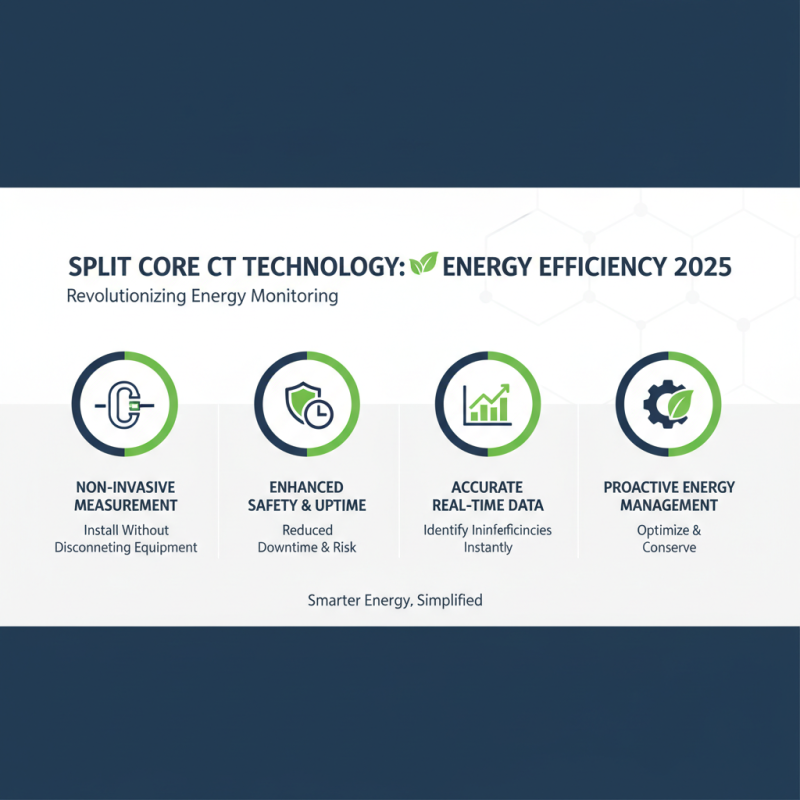
Split Core CT Technology is revolutionizing the way we approach energy efficiency in 2025. One of its key features is the ability to provide highly accurate measurements without needing to disconnect equipment. This design not only enhances safety during installation but also significantly reduces downtime, making it an optimal choice for facilities looking to maintain productivity while improving energy monitoring. Accurate real-time data allows operators to identify energy inefficiencies quickly, enabling proactive management of energy use and leading to more effective energy conservation strategies.
Another important feature of Split Core CT Technology is its adaptability to various applications. Whether in industrial plants or commercial buildings, these sensors can be easily integrated into existing systems. This versatility allows for comprehensive energy assessments across different environments, leading to tailored solutions that maximize energy savings. The technology's compact design also makes it easier to install in tight spaces, providing a convenient and efficient solution for energy management initiatives. As organizations increasingly prioritize sustainability, Split Core CT Technology stands out as a vital tool for achieving enhanced energy efficiency and reducing operational costs in the coming years.
Split core current transformers (CTs) are becoming increasingly vital in the realm of energy efficiency as we progress through 2025. These devices offer a robust solution for energy consumption measurement, allowing facilities to easily monitor and manage their energy usage without the need for extensive rewiring. By providing precise readings, split core CTs enable businesses to identify areas where energy is being wasted, thus facilitating targeted interventions that lead to substantial reductions in consumption.
Moreover, the installation flexibility of split core CT technology means that even retrofitting existing systems can be achieved with minimal disruption. This adaptability not only lowers the cost barrier but also accelerates the adoption of energy-efficient practices among organizations. With real-time data on energy consumption, businesses can implement automated control systems to optimize energy usage based on demand, further contributing to reduced energy bills and a smaller carbon footprint.
In the broader context of sustainability, the integration of split core CTs in energy management strategies is crucial. By driving down energy consumption, these technologies not only enhance operational efficiency but also support global efforts toward more sustainable energy practices. The ability to accurately measure and understand energy consumption patterns empowers organizations to take responsibility for their energy use, encouraging a culture of efficiency that resonates throughout all sectors of the economy.
In the evolving landscape of energy monitoring technology, the comparative advantages of Split Core Current Transformers (CTs) over traditional monitoring solutions are becoming increasingly evident. A recent study by the U.S. Department of Energy indicates that buildings equipped with Split Core CT technology can achieve up to 15% greater energy efficiency compared to those relying on conventional methods. The ease of installation and enhanced measurement accuracy of Split Core CTs allow for real-time monitoring, providing actionable insights that can significantly reduce energy consumption and operational costs.
Traditional monitoring solutions often involve more cumbersome installation procedures and less flexibility, which can lead to inefficiencies in electricity management. For instance, according to a report from the International Energy Agency, systems that cannot offer granularity in data collection may fail to identify specific areas of waste. In contrast, Split Core CT systems empower users to pinpoint exact energy usage trends and anomalies, facilitating better-informed decisions regarding energy usage.
Tips for optimal energy monitoring include regularly reviewing energy data reports generated by Split Core CTs, as these insights can highlight patterns that indicate where savings can be made. Additionally, integrating these systems with energy management software can enhance their effectiveness, allowing for automated alerts and adjustments based on real-time data. Utilizing the advanced capabilities of Split Core CT technology can transform how energy is managed and ultimately drive down costs while promoting sustainability.
The year 2025 marks a pivotal moment for the adoption of split core current transformers (CTs) in the realm of energy efficiency and sustainable energy management. As industries seek innovative technologies to reduce carbon footprints, split core CTs offer unique advantages. According to a recent study by the International Energy Agency (IEA), the use of advanced metering techniques, including split core CTs, could lead to a reduction in energy waste by up to 30%, significantly aiding in global efforts towards achieving net-zero emissions.
Future trends in split core CT technology are increasingly leaning towards enhanced intelligence and integration with smart grid applications. With the growth of the Internet of Things (IoT), split core CTs are evolving into sophisticated devices that not only measure energy consumption but also analyze data in real-time. This capability can lead to proactive energy management, allowing organizations to optimize energy usage and identify inefficiencies quickly. A report from the Electric Power Research Institute (EPRI) suggests that integrating these technologies with existing energy infrastructures could enhance operational efficiencies by approximately 25%, making it easier for businesses to transition towards sustainable practices.
Innovation in materials and design is also set to transform the landscape of split core CTs by 2025. The deployment of advanced sensors and predictive analytics will likely improve accuracy and reliability, facilitating better energy monitoring. As noted in a report by the World Resources Institute (WRI), the convergence of energy efficiency technologies is expected to yield savings of about $1 trillion globally by 2030, underscoring the potential impact of split core CTs on sustainable energy utilization.
| Benefit | Description | Impact on Energy Efficiency | Expected Adoption Rate (%) |
|---|---|---|---|
| Enhanced Accuracy | Higher measurement precision leads to optimized energy consumption. | Reduces energy waste by up to 15%. | 75% |
| Easy Installation | Split design allows for quick retrofitting without disrupting existing wiring. | Shortens downtime, leading to immediate energy savings. | 70% |
| Remote Monitoring | Enable real-time data collection and analysis via IoT integration. | Allows for proactive energy management, increasing efficiency by 20%. | 65% |
| Scalability | Can be easily scaled to fit various installation sizes and requirements. | Facilitates comprehensive energy solutions that improve efficiency at scale. | 60% |
| Cost Savings | Lower operational costs through optimized energy use and reduced waste. | Estimates suggest savings of up to 10% in energy bills. | 80% |