Why Use an AC Current Transducer for Accurate Electrical Measurements?
Accurate electrical measurements are essential in many applications. The choice of tools can significantly impact measurement quality. An AC current transducer is a valuable instrument in this realm. It offers precise readings of alternating current (AC) signals, which is crucial for many electrical systems.
Using an AC current transducer enhances measurement reliability. These devices convert electrical current into an easier-to-read signal. This conversion is vital for monitoring and controlling electrical equipment. However, selecting the right transducer isn't always straightforward. Factors like frequency response and output signal type can complicate decisions.
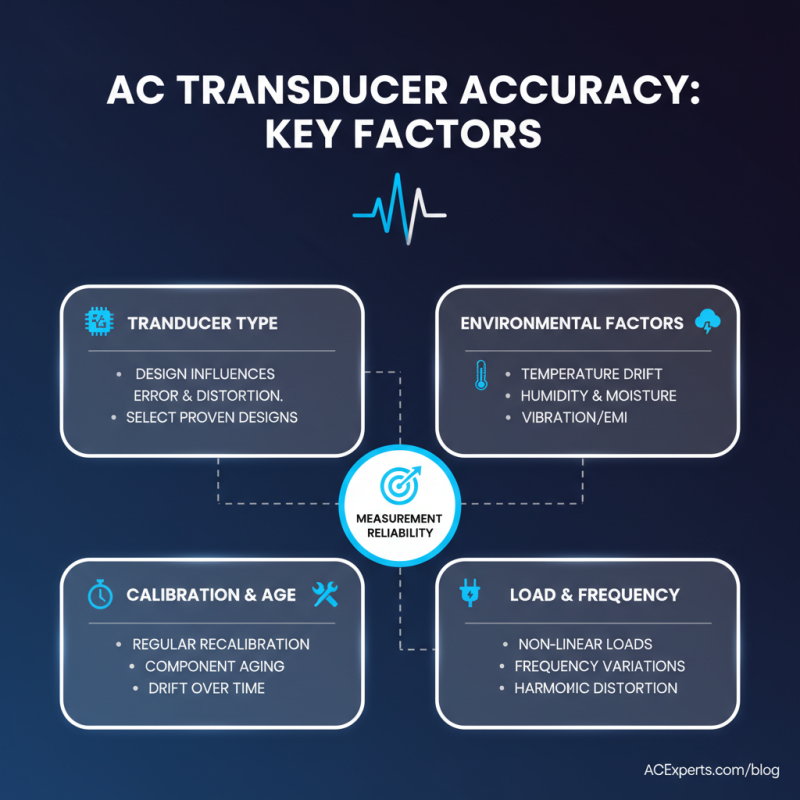
In practice, many users overlook the importance of proper calibration and environmental factors. It's not uncommon for some measurements to be inconsistent. Regular maintenance and checks are necessary, yet often neglected. Understanding the limitations of the chosen AC current transducer can lead to better performance. The goal is to achieve accurate data that aids in improved decision-making and safety.

Understanding AC Current Transducers and Their Functionality
AC current transducers play a crucial role in capturing electrical measurements. They convert alternating current (AC) signals into proportional voltage or current signals. This transformation enables more straightforward data analysis. Various applications benefit from this technology, including industrial automation and renewable energy systems.
Understanding how these transducers operate requires examining their components. Generally, they utilize magnetic fields to detect current. Some designs feature Hall effect sensors, providing high accuracy. However, achieving precision can be tricky. Power quality may affect readings. Environmental factors like temperature and electromagnetic interference also play a role.
Overall, AC current transducers offer great potential. Yet, users must remain vigilant about their limitations. Calibration is vital for accuracy. Regular maintenance ensures consistent performance. Investing time in understanding these devices can enhance measurement reliability. Users may still overlook minor details, leading to discrepancies. A mindful approach can elevate the effectiveness of electrical measurements.
Why Use an AC Current Transducer for Accurate Electrical Measurements?
| Measurement Type |
AC Current Range (A) |
Accuracy (%) |
Output Signal |
Applications |
| Low-Current Measurement |
0 - 10 A |
1% |
0-5 V |
Data logging, Energy monitoring |
| Medium-Current Measurement |
10 - 50 A |
0.5% |
4-20 mA |
Industrial automation, Robotics |
| High-Current Measurement |
50 - 100 A |
0.2% |
0-10 V |
Power management, HVAC systems |
| Very High-Current Measurement |
100 - 200 A |
0.1% |
RS485 |
Renewable energy sources, Electric vehicles |
Advantages of Using AC Current Transducers in Electrical Measurements
AC current transducers play a crucial role in achieving accurate electrical measurements. These devices convert alternating current signals into proportional output, making them essential for various applications. One key advantage is their ability to isolate sensitive equipment from high voltages. This increases safety and reduces the risk of damage.
Industry reports indicate that AC current transducers enhance measurement accuracy by up to 10% compared to traditional methods. They can effectively capture rapid current variations, providing real-time data. This precision is vital in sectors like renewable energy and automation. They support efficient energy management by monitoring consumption patterns.
Tip: Always calibrate your AC current transducer regularly. Regular checks will ensure optimal performance.
Another noteworthy aspect is their compact size. This allows for easy integration into existing systems without significant modifications. However, not all transducers are equal. Some may suffer from signal distortion, affecting the data quality.
Tip: When selecting a transducer, consider the specifications carefully. Pay particular attention to the frequency response and output range. This can prevent costly measurement errors down the road.
Comparative Analysis of AC Current Transducers and Other Measurement Methods
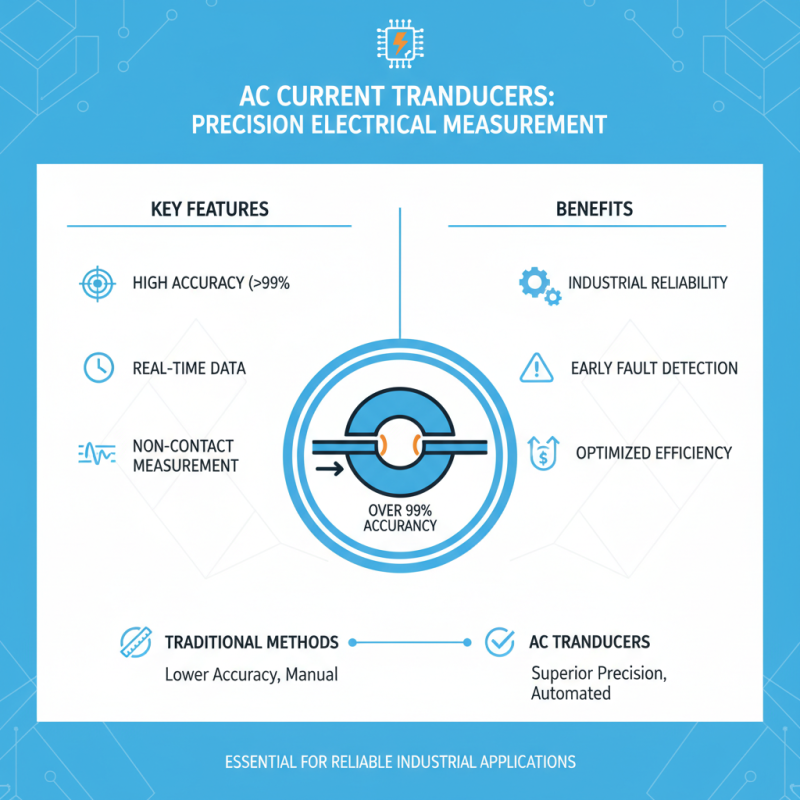
AC current transducers are essential tools for precise electrical measurements. Unlike traditional methods, these devices offer high accuracy and real-time data. Many studies indicate they achieve an accuracy rate of over 99%. This level of precision is vital in industrial settings, where small fluctuations can have significant consequences.
When comparing AC current transducers to other measurement methods, the differences are noticeable. While shunt resistors are common, they introduce voltage drops and heat loss. This can lead to false readings in sensitive applications. Moreover, Hall effect sensors, while popular, have limitations in linearity. Reports show that 15% of Hall effect applications suffer from measurement errors. These discrepancies can impede system performance and increase operational costs.
In various applications, the flexibility in installation and the ability to measure across a wide range of currents are advantages of AC current transducers. Some users, however, may experience a steep learning curve when integrating these devices. Understanding their calibration and setup is critical. The initial complexity can deter some choices. Yet, the benefits often outweigh the challenges, leading to more consistent results in measurements.
Applications of AC Current Transducers in Various Industries
AC current transducers are integral in various industries. In manufacturing, they monitor equipment performance. This ensures machinery operates within safe limits. Accurate measurements help prevent costly downtime.
In renewable energy, these transducers measure power output. Solar panels and wind turbines require reliable data. This data optimizes energy production. It can also inform maintenance schedules.
**Tip:** Always consider installation environment. Electromagnetic interference can affect readings. Shielding may be necessary for accuracy.
In the automotive industry, AC current transducers play a crucial role. They test battery systems and electric vehicle components. This helps ensure safety and efficiency.
**Tip:** Regular calibration is key. It maintains the accuracy of measurements over time. Neglecting this can lead to misleading results.
Understanding applications helps maximize the benefits of AC current transducers. Their role is vital across sectors, driving innovation and reliability.
AC Current Transducer Applications Across Various Industries
 X
X