• Products
  • Solutions
  • Support
  • Contact
  • Order OnlineOrder Online

2026 Top Cat Litter Box Suppliers for Global Buyers

The 2026 Cat Litter Box market is becoming more specialized, competitive, and buyer-focused. Global purchasers now evaluate suppliers beyond price lists and attractive product photos. They examine odor control, cleaning access, material safety, noise levels, replacement parts, and manufacturing consistency. A reliable supplier should explain these details clearly. Vague promises are not enough.

Dr. Mikel Delgado, a certified applied animal behaviorist, has said, “The litter box is one of the most important resources in your home.” Her observation remains practical for buyers selecting products for different cat sizes, household layouts, and usage habits. A successful Cat Litter Box must fit real routines. It should allow a cat to enter comfortably, turn naturally, and leave without stress. Small design choices matter, such as a low step, a sealed waste drawer, or a quiet motor.

This guide reviews leading Cat Litter Box suppliers for global buyers in 2026. It considers product design, factory capability, quality control, customization, certifications, packaging, shipping support, and after-sales service. Supplier information can change quickly. Buyers should verify current documents, production samples, warranty terms, and testing records before placing large orders. No ranking removes every uncertainty. That is worth remembering.

Some advanced models include sensors, app controls, and automated cleaning cycles. These features may improve convenience, but they can also increase repair risks and user confusion. A simple product may perform better in a busy home. The best supplier is not always the largest one. It is the one that consistently matches product claims with measurable performance.

2026 Top Cat Litter Box Suppliers for Global Buyers

Cat Litter Box Supplier Market Overview for Global Buyers

The cat litter box supplier market is becoming more specialized for global buyers. Demand is shaped by apartment living, multi-cat households, odor control, and easier cleaning. A compact apartment needs different features than a large pet-care facility. Open designs suit nervous cats, while covered models offer stronger privacy and odor containment.

Experienced suppliers should provide clear product specifications, material details, production capacity, and export documentation. Buyers should request samples before discussing large orders. Check tray thickness, hinge strength, filter placement, and surface smoothness. Small defects become expensive when thousands of units arrive. Not every catalog reflects current factory capability.

Professional sourcing also requires factory audits, quality inspections, packaging tests, and reliable shipping schedules. Recycled plastics may support sustainability goals, but their consistency requires careful testing. Suppliers should explain applicable safety requirements in each target market. They should also support customization without hiding minimum order quantities or tooling fees. Lead times can change during peak seasons. Treat estimates carefully.

Global buyers should compare suppliers through measurable evidence, not attractive product photos. A useful evaluation sheet can track sample quality, response speed, defect rates, payment terms, and after-sales handling. Some market data remains uncertain, especially for emerging regions. That uncertainty deserves attention rather than confident guessing. A supplier may offer a low price, yet weak packaging or delayed communication can damage the entire launch.

Key Product Types and Features to Compare in 2026

For global buyers, cat litter boxes in 2026 will divide into open, covered, automatic, and sifting designs. Each type solves a different household problem. Grand View Research reports continued growth in the global cat litter market, driven by urban living and premium pet care. This trend increases demand for compact, low-odor equipment.

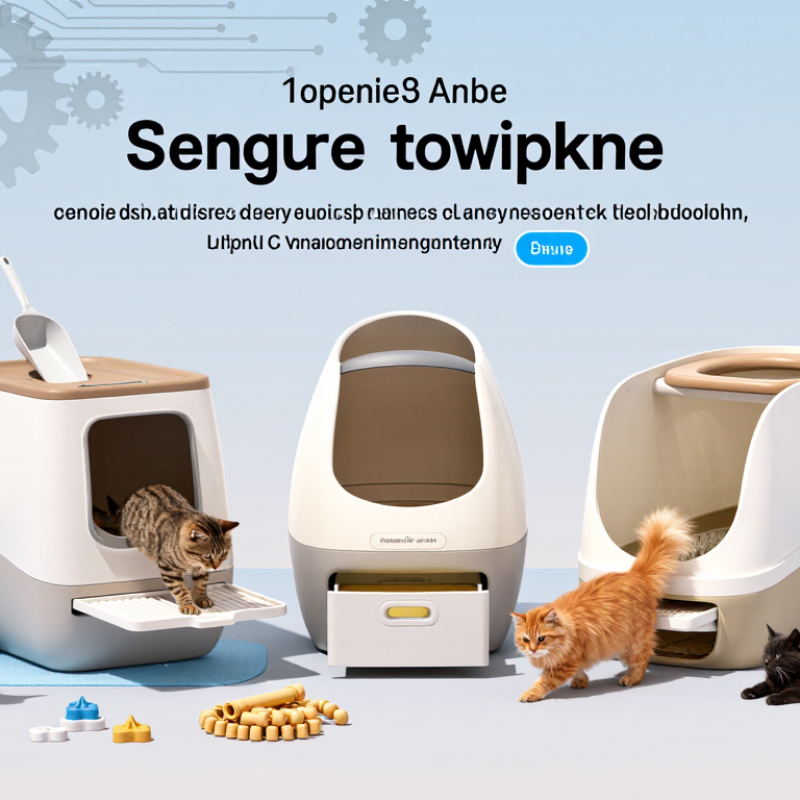
Open boxes offer easier cleaning and better airflow. Covered models reduce visible waste, but some cats dislike enclosed spaces. Automatic boxes can separate clumps after use, saving daily effort. However, buyers must inspect sensor reliability, noise levels, waste-bin capacity, and replacement-part availability. Sifting boxes need less power and suit owners who prefer manual control. Material also matters. Clay remains practical, while silica and plant-based litter can reduce weight or tracking. No option wins every home. Cat behavior remains unpredictable.

Tips: Test the entrance height, inner dimensions, and cleaning path with real-use conditions. Ask suppliers for independent test records, electrical certifications, dust measurements, and warranty terms. The 2024 APPA National Pet Owners Survey shows pets remain deeply integrated into household life, but convenience should not replace animal comfort. I would also compare three months of consumable costs, not only the purchase price. Product pages often make this harder than necessary. Suppliers with clear manuals, stable spare-part supply, and documented quality control deserve closer attention.

2026 Top Cat Litter Box Suppliers for Global Buyers: Product Types and Features

This category-level comparison uses a 1–5 buyer score based on commonly recognized product characteristics: accessibility, odor control, cleaning automation, and space efficiency. Scores describe product types rather than individual companies or brands.

Standards for Evaluating International Cat Litter Box Suppliers

2026 Top Cat Litter Box Suppliers for Global Buyers

Standards for Evaluating International Cat Litter Box Suppliers

International buyers should evaluate suppliers through evidence, not attractive catalogs. Product samples reveal more than polished photographs. Check the box’s dimensions, odor control, leakage resistance, filter access, and cleaning effort. A lid that feels loose during testing may create complaints after shipment. Small details matter.

Ask for material specifications, production records, and recent quality-control reports. Reputable suppliers should explain plastic grades, raw material sources, and inspection procedures clearly. Independent laboratory reports can support claims about material safety and durability. However, documents must match the actual sample. This gap is easy to miss.

Factory capability also deserves close review. Examine molding equipment, assembly areas, packaging methods, and storage conditions. Confirm whether the supplier can maintain consistent quality across large orders. Request a pre-shipment inspection and define acceptable defect levels in writing. Keep communication records.

International reliability includes more than product quality. Evaluate response speed, sample preparation, export experience, carton protection, lead-time accuracy, and after-sales support. A supplier should provide realistic delivery dates, not optimistic guesses. Ask how damaged units, missing parts, or manufacturing defects will be handled.

No supplier is perfect. A transparent partner admits limitations and proposes corrections. That matters more than impressive promises. Buyers should also review local import requirements, labeling rules, and recycling expectations before placing orders. One overlooked requirement can delay an otherwise successful shipment.

Top Supplier Selection by Region, Capacity, and Customization

Regional demand changes the right cat litter box supplier. Asian manufacturers often provide broad capacity, competitive tooling, and flexible production schedules. European suppliers may suit buyers prioritizing refined design, material traceability, and shorter regional shipping routes. North American suppliers can offer market familiarity, responsive communication, and easier after-sales coordination. Regional fit matters.

Capacity should be verified, not simply promised. Ask for monthly output, current utilization, mold availability, and peak-season plans. Review sample consistency across several production batches. A factory producing 100,000 units monthly may still struggle with a sudden 30,000-unit order. Check packaging space, inspection staffing, and backup component sources. Small details expose weak planning.

Customization requires clear technical control. Suppliers should support dimensions, odor-control features, filter placement, colors, packaging, and user instructions. Request engineering drawings before approving a mold. Confirm plastic grade, wall thickness, hinge cycles, and load testing.

A pilot order can reveal assembly gaps that polished samples hide. I have found that attractive prototypes sometimes conceal slow production methods. That risk deserves attention.

Buyers should also compare tooling ownership, minimum order quantities, revision fees, and defect-handling procedures. Keep written records. Verbal confidence is not enough. Performance data, factory audits, and realistic delivery milestones create a more reliable supplier shortlist.

Import, Quality Control, and Partnership Considerations

2026 Top Cat Litter Box Suppliers for Global Buyers

Import, Quality Control, and Partnership Considerations

Global buyers should evaluate more than product photos and quoted prices. APPA’s 2025 State of the Industry report recorded approximately 152 billion dollars in U.S. pet spending during 2024. That scale increases demand, but it also exposes weak supply planning. Ask suppliers for production capacity, export experience, carton dimensions, and realistic lead times. A low price can become expensive after damaged pallets, customs delays, or inconsistent replenishment.

Quality control should begin before mass production. Request material specifications, batch samples, odor checks, dust measurements, and load-bearing tests for plastic components. Inspect hinge alignment, sensor response, waste-drawer sealing, and cable protection where applicable. Use a defined sampling plan, such as ANSI/ASQ Z1.4, rather than relying on visual confidence. Euromonitor International’s 2024 pet care data highlights continued premiumization in pet products, yet premium packaging cannot repair poor function. Small details matter.

Partnership terms deserve equal attention. Include written acceptance limits, inspection timing, corrective-action procedures, spare-part support, and batch traceability. Keep sealed reference samples from approved production. They help resolve disagreements months later. I would also test a smaller shipment first. It is less efficient, but safer. Supplier audits can reveal clean factories, although one visit never proves consistent performance. Forecast sharing may improve capacity, but buyers should avoid promises they cannot maintain. Perfect cooperation is unlikely; transparent correction is more valuable.

2026 Top Cat Litter Box Suppliers for Global Buyers - Import, Quality Control, and Partnership Considerations
Supplier Profile Primary Sourcing Region Main Product Capability Typical MOQ Range Typical Production Lead Time Common Materials Electrical Compliance Considerations Recommended Quality-Control Checks Export and Import Documents Best Partnership Fit
Profile A East Asia Automatic self-cleaning units, app-enabled models, molded plastic housings 300–1,000 units 35–60 days after approved samples and deposit PP, ABS, stainless steel, silicone seals Verify applicable CE, EMC, LVD, RoHS, REACH, or destination-market requirements Motor endurance, sensor accuracy, odor-control performance, leakage, noise, app connectivity, carton drop testing Commercial invoice, packing list, bill of lading or air waybill, certificate of origin where required, test reports, user manual Retailers and e-commerce buyers seeking feature-rich private-label products
Profile B Southeast Asia Manual covered boxes, modular litter systems, assembled and flat-pack products 500–3,000 units 30–50 days after artwork and specifications approval PP, HDPE, recycled plastic options, galvanized or stainless steel accessories Usually non-electrical; confirm requirements if fans, lights, sensors, or powered accessories are added Dimensional accuracy, door fit, edge safety, plastic odor, load strength, color consistency, packaging compression Commercial invoice, packing list, transport document, country-of-origin documentation, material declarations when requested High-volume buyers prioritizing competitive pricing and simple operation
Profile C South Asia Metal litter trays, premium stainless-steel accessories, replacement components 200–1,000 units 40–70 days, depending on metal forming and finishing 304 stainless steel, powder-coated steel, ABS or PP handles and clips Generally non-electrical; electrical components require separate destination-market testing Weld quality, corrosion resistance, burr inspection, coating adhesion, tray flatness, sharp-edge inspection Commercial invoice, packing list, bill of lading, certificate of origin if applicable, metal composition or coating documents when requested Premium and hospitality-oriented channels requiring durability and easy cleaning
Profile D Eastern Europe and Türkiye Regional private-label production, durable plastic accessories, short-distance replenishment 100–800 units 25–50 days, subject to tooling and material availability PP, ABS, HDPE, stainless steel mesh and fittings Confirm CE and applicable EMC, LVD, RoHS, and REACH obligations for powered models sold in Europe Incoming-material inspection, assembly fit, odor testing, hinge durability, barcode accuracy, pallet stability Commercial invoice, packing list, transport document, EORI and customs information where applicable, origin documentation European buyers needing shorter replenishment cycles and regional logistics
Profile E North America Premium automatic systems, replacement parts, customer-specific assembly and packaging 100–500 units 30–60 days for production; stocked items may ship sooner ABS, PP, stainless steel, silicone, electronic control modules Check FCC requirements where applicable and consider UL or ETL certification for the intended product and market Electrical safety, overheating protection, power-adapter compatibility, firmware stability, noise, water ingress, warranty-return simulation Commercial invoice, packing list, bill of lading or air waybill, customs entry data, test reports, warranty and battery documents if applicable Buyers requiring after-sales support, replacement parts, and stronger regional service capability
Buyer note: MOQ, lead time, certifications, customs classification, and test requirements vary by product design, electrical configuration, destination country, order volume, and shipping method. Confirm all commercial and regulatory information directly with the selected supplier before placing an order. For powered products, certification should cover the complete finished product and the intended market.

Article Source: