2026 Best Insulated Terminals for Global Buyers?
Global buyers face a changing electrical landscape. The International Energy Agency’s Renewables 2024 report projects nearly 5,500 gigawatts of new renewable power capacity between 2024 and 2030. Its Global EV Outlook 2024 also estimated electric-car sales would reach about 17 million that year. These shifts bring more wiring into solar installations, vehicle systems, control panels, and maintenance work. Small connection choices matter.
This guide to the 2026 Best Insulated Terminals compares practical options for different markets and applications. It focuses on details buyers can verify: conductor size, rated current and voltage, insulation material, temperature range, plating, crimp compatibility, and product traceability. IEC 61210 covers safety requirements for flat quick-connect terminations, offering a useful reference when evaluating relevant terminal types. Requirements vary by product and application, so buyers should check current certification documents rather than rely on a supplier’s headline claim.
A neat product photo proves little. A terminal may fit the wire yet fail to match the specified tooling or operating conditions. We’ll look at construction, documentation, sourcing, and the questions worth asking before ordering. There is no universal winner; cost and availability can outweigh a small performance advantage in some projects. That trade-off is easy to underestimate. Even a careful comparison cannot replace testing a sample with the actual wire, tool, and application.
What Insulated Terminals Are and How They Work
2026 Best Insulated Terminals for Global Buyers?
What Insulated Terminals Are and How They Work
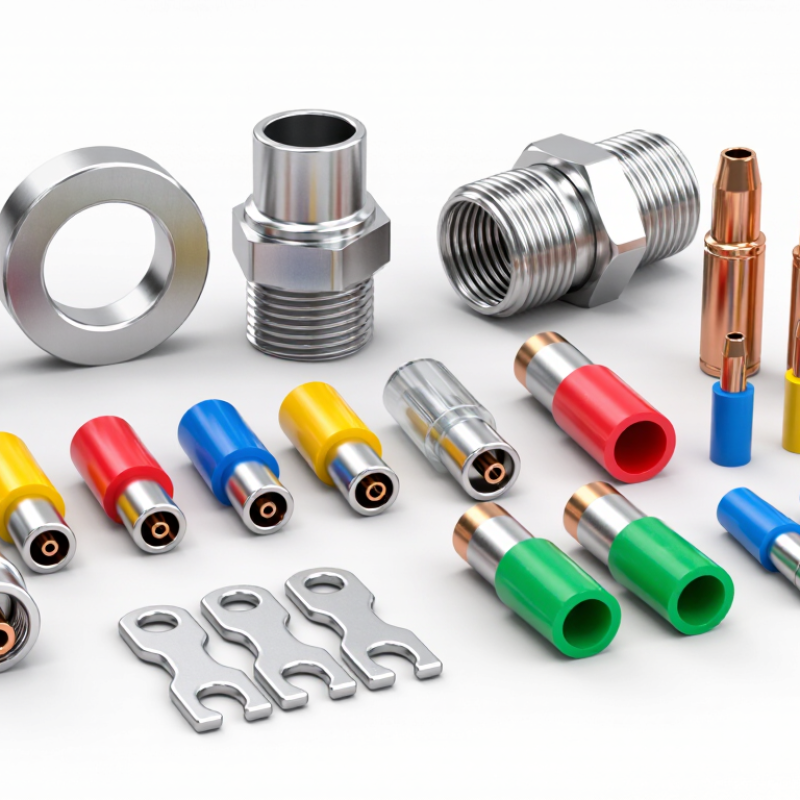
An insulated terminal joins an electrical wire to a component, power lead, or another wire. It combines a conductive metal section with a nonconductive outer sleeve. The metal carries current; the sleeve helps reduce accidental contact with nearby conductive parts. Common forms include ring, spade, and butt terminals. Each suits a different connection point or wiring layout.
To install one, a technician strips a measured length of insulation, inserts the exposed conductor into the terminal barrel, and compresses the barrel with a compatible crimping tool. A sound crimp holds the wire firmly and maintains electrical contact. The sleeve should not be mistaken for a waterproof seal. Nor does color alone confirm fit: check the terminal’s wire-size range and the tool’s specified die. Small mismatches can be easy to overlook.
Tips: Strip only enough insulation to fill the barrel. Keep stray strands inside. After crimping, pull gently on the wire and inspect the connection. If it moves, stop and check the wire size, tool, and crimp position. A neat exterior can still hide a weak crimp.
2026 Best Insulated Terminals for Global Buyers? - What Insulated Terminals Are and How They Work
Insulated terminals are conductive connectors with a non-conductive sleeve or housing. The metal barrel is crimped onto a stripped wire, while the insulation helps reduce accidental contact and supports the connection. The best type depends on the wire, mating hardware, environment, and applicable product requirements.
| Terminal Type | Typical Form and Use | Common Wire-Size Options | How the Connection Works | Key Checks for Global Buyers |
| Ring terminal | Closed ring for a stud, screw, or bolt connection; useful where a secure, retained connection is needed. | Many product ranges cover approximately 22–10 AWG (about 0.3–6 mm²); sizes vary by series. | The wire is crimped into the barrel, and the ring is secured under a fastener. | Match the ring’s inside diameter to the stud or screw size. Check barrel size, conductor material, crimp-tool compatibility, and required temperature and voltage ratings. |
| Fork (spade) terminal | Open-ended fork for screw or stud connections where faster installation or removal is useful. | Commonly available for approximately 22–10 AWG (about 0.3–6 mm²), depending on the product range. | The crimped wire attaches to the fork, which slides under a loosened fastener. | Confirm fork width and fastener size. Compared with a ring, an open fork may be easier to remove but can be less resistant to displacement if the fastener loosens. |
| Butt splice | Straight, in-line connector for joining two wire ends. | Commonly offered across multiple wire-size bands, including approximately 22–10 AWG (about 0.3–6 mm²). | Each wire is inserted into one end of the metal sleeve and crimped separately. | Choose a splice sized for both conductors and the intended crimp tool. For outdoor, wet, or corrosive environments, verify whether a sealed or adhesive-lined design is required. |
| Quick-disconnect receptacle or tab | Push-on connection used for equipment wiring and serviceable electrical assemblies. | Many ranges include approximately 22–10 AWG (about 0.3–6 mm²). | A receptacle slides onto a compatible tab; the wire is crimped to the terminal barrel. | Match tab width and thickness precisely. Common nominal widths include 2.8, 4.8, and 6.3 mm; verify the drawing and mating-terminal specification. |
| Bullet terminal | Round male-and-female connector for a separable wire-to-wire connection. | Available in product-specific wire-size ranges, often including approximately 22–10 AWG (about 0.3–6 mm²). | The crimped male bullet fits into a compatible female socket. | Check bullet diameter, engagement fit, wire range, and whether the connection needs extra protection from vibration, moisture, or accidental separation. |
| Insulated wire ferrule | Tubular sleeve for preparing stranded wire for compatible screw-clamp terminals. | Product families commonly span about 0.25–16 mm², with smaller and larger sizes also available. | The stripped strands enter the metal tube, which is crimped into a compact shape before insertion into a terminal clamp. | Match ferrule size to conductor cross-section and the terminal’s permitted conductor type. Use a ferrule crimper designed for the selected ferrule profile. |
Important selection note: Wire ranges and dimensions above are common examples, not universal limits. Insulation material, temperature rating, voltage rating, approvals, and color coding vary by product and market. Confirm the manufacturer’s current datasheet, relevant local requirements, and the exact wire, terminal, tool, and mating-part specifications before purchase or installation.
Main Types of Insulated Terminals and Their Applications
2026 Best Insulated Terminals for Global Buyers?
Main Types of Insulated Terminals and Their Applications
Insulated terminals connect conductors while covering the crimped barrel to reduce accidental contact. Ring terminals fit securely beneath a screw or stud, making them useful in control panels and equipment exposed to vibration. Fork terminals allow faster removal where connections need regular servicing. Quick-disconnect terminals suit appliances and maintenance points, while pin terminals fit compact screw-clamp blocks. For joining two wires, insulated butt splices provide a covered inline connection.
Insulation and geometry both matter. PVC-covered terminals are common for general indoor wiring; nylon options often offer greater heat tolerance and flexibility. Heat-shrink butt splices add a tighter seal around the joint, but only when installed with compatible tooling. Small detail, big consequence. Match the terminal to wire gauge, stud size, current, temperature, and the actual crimp tool. A tidy-looking crimp can still be loose.
Market context is expanding: the IEA’s Electricity 2025 report states that global electricity demand grew 4.3% in 2024. Its 2023 report, Electricity Grids and Secure Energy Transitions, says annual grid investment must rise from about USD 300 billion to over USD 600 billion by 2030. These figures describe wider electrical infrastructure, not terminal sales directly. For buyers, they signal the value of checking connector fit and traceable specifications across larger projects. A catalog choice is not always the field choice.
2026 Best Insulated Terminals for Global Buyers? — Main Types and Applications
How to read this chart: The bars show indicative upper service temperatures commonly associated with these insulation materials, not guaranteed ratings for every terminal. PVC and nylon insulated terminals are widely used in general electrical wiring; heat-shrink terminals are used where a sealed connection is needed; silicone-insulated terminals are suited to higher-temperature environments. Always check the individual product datasheet and applicable standards before selection.
Materials, Insulation Ratings, and Performance Factors
Insulated terminals are selected by more than color or price. The metal barrel carries current, while the sleeve helps prevent accidental contact and supports the crimped connection. Copper offers good conductivity; plating can help limit surface corrosion. The insulation material matters too. PVC is common for general wiring, while nylon may better resist heat and abrasion. Neither choice suits every environment.
Check the operating temperature and voltage ratings against the actual installation, not just the equipment label. Ratings depend on the terminal design and test method, so compare like with like. A terminal near a warm motor may need a higher temperature rating than one inside a cool control cabinet. Watch for oil, moisture, vibration, and tight spaces. Small details matter.
Fit is equally important. Match the terminal to the wire gauge and conductor type, then use a compatible crimping tool. A loose crimp can heat up; an over-crimp may damage strands or insulation. Check that the sleeve stays clear of the metal contact area. Simple, but easy to overlook. For global purchasing, request datasheets showing material, temperature range, voltage rating, and relevant test standards. A tidy specification sheet can still leave questions about real-world durability, so samples and installation checks are worth considering.
How to Choose Insulated Terminals for Global Markets in 2026
For global projects in 2026, choose insulated terminals by application, not appearance. Match the terminal’s metal and size to the conductor, then check its insulation material and temperature rating. A 1.5 mm² wire, for example, needs a terminal specified for that conductor range. Fit matters. A loose barrel can create heat; an oversized one may crimp poorly. Also consider moisture, vibration, oil, and available installation space.
Crimp quality depends on the right terminal, tool, and die combination. Use the specified tooling and follow the manufacturer’s crimp instructions. Inspect sample connections for even compression, secure wire retention, and undamaged insulation. Do not guess. For global distribution, ask for clear technical data, traceable batch details, and test documentation relevant to the intended use. Confirm applicable national and industry requirements with the importer or a qualified engineer; one approval rarely answers every market’s needs.
Supply consistency deserves attention too. Compare conductor ranges, plating, packaging, and lead times across proposed options. For repeat orders, test samples using the actual wire and production tooling before approving a large shipment. A data sheet cannot reveal every installation problem. Even a careful selection may need adjustment when the enclosure, operator, or assembly process changes. The best choice is the one that performs reliably in the real build, not merely the one with the longest specification list.
International Standards, Certifications, and Sourcing Considerations
For global buyers, an insulated terminal is only as dependable as its documented rating. Check IEC 61210 for applicable flat, quick-connect terminations, and compare the exact wire size, conductor material, temperature rating, and test conditions on the product record. Small details matter. A certificate for one terminal family may not cover every color, size, or production site. Ask suppliers to identify the precise model and certification scope before approving samples.
Certification marks do not replace application checks. Request current test reports, traceable lot numbers, and clear material declarations. Confirm whether the insulation suits the installation’s heat, vibration, moisture, and chemical exposure. IEC 60529 ingress-protection ratings apply to enclosures, not automatically to a loose terminal. That distinction is easy to miss. For cross-border orders, verify which conformity documents the destination market and end customer actually require; documentation expectations can differ.
Traceability deserves attention during supplier qualification. The OECD and EUIPO’s 2021 report, Mapping Global Trade in Fakes, estimated counterfeit and pirated goods at 2.5% of world trade in 2019. This estimate is not specific to electrical terminals, but it supports checking authorized supply routes and batch records. I would still ask for independent verification when a quote looks unusually low. That can slow sourcing, yet an attractive price means little if the supplied insulation or plating differs from the approved sample.
 X